Casinos That Accept Wire Transfers in the UK
 Available in GB
Bank-funded casino payments can use different routes, so the cashier’s method and transaction details matter.

Table of Contents
- How bank transfers fit into UK casino payments
- Check the cashier before you choose a transfer route
- Make sure the account details match
- What can affect a bank transfer’s cost?
- Deposits, minimums and account limits
- How long a casino bank transfer may take
- Bank-transfer withdrawals and casino approval
- Compare the full cost, not just the headline fee
- Can casino winnings be paid by bank transfer?
- Keep deposits and withdrawals on a consistent route
How bank transfers fit into UK casino payments
A bank transfer is one route for moving money between your bank account and a casino account. It sits alongside card payments, e-wallets and other payment options, but it is not simply another name for every payment that starts from a bank account. The method shown in a cashier may be a bank transfer or an open-banking service, and those routes can work differently.
A conventional transfer is initiated through your bank, using the payment details provided for the transaction. Open banking instead connects a payment request with your bank, allowing you to authorise it through the banking service. Both involve a bank account, but the steps you take and the way the payment is presented can differ. The label matters: “bank transfer” on a casino page does not, by itself, tell you which route the cashier will offer.
For readers looking for a bank wire transfer casino option, the practical attraction is that the payment comes from a bank account rather than a separate prepaid balance. That can make the route familiar if you already manage your money through online banking. It may also suit someone who prefers not to use a card or e-wallet for gambling transactions. Familiarity, however, is not the same as universal availability: payment methods are offered by individual sites and can differ.
If you’re looking for a UK casino that accepts wire transfers, check the payment methods and terms before you deposit. This list provides the available payout-speed information, but that alone does not confirm wire-transfer support.
Payout speed: 1-3 business days The available information gives a payout speed of 1–3 business days. Check directly whether wire transfers are supported.
Payout speed: 1-3 business days The available information gives a payout speed of 1–3 business days. Check directly whether wire transfers are supported.
Payout speed: 1-3 business days The available information gives a payout speed of 1–3 business days. Check directly whether wire transfers are supported.
Payout speed: 1-3 business days The available information gives a payout speed of 1–3 business days. Check directly whether wire transfers are supported.
Payout speed: 1-3 business days The available information gives a payout speed of 1–3 business days. Check directly whether wire transfers are supported.
Payout speed: 1-3 business days The available information gives a payout speed of 1–3 business days. Check directly whether wire transfers are supported.
Payout speed: 1-3 business days The available information gives a payout speed of 1–3 business days. Check directly whether wire transfers are supported.
Payout speed: 1-3 business days The available information gives a payout speed of 1–3 business days. Check directly whether wire transfers are supported.
Payout speed: 1-3 business days The available information gives a payout speed of 1–3 business days. Check directly whether wire transfers are supported.
Payout speed: 1-3 business days The available information gives a payout speed of 1–3 business days. Check directly whether wire transfers are supported.
The wider UK casino payment mix gives useful context. Debit cards, including Visa and Mastercard, are commonly accepted. E-wallets such as PayPal, Skrill and Neteller appear at some sites, while Paysafecard is a deposit-only voucher. Some UKGC-licensed casinos also accept Apple Pay for deposits. These options serve different purposes: a card uses a payment card linked to an account, an e-wallet introduces a separate wallet balance or service, and a voucher is not a general-purpose bank payment route.
Credit cards are not an alternative for gambling deposits at UK-licensed casinos. The regulator’s ban took effect on 14 April 2020 and remains in force. That also rules out routing credit-card funds through a money service business or a wallet that permits credit-card funds to be used for gambling. A bank transfer should not be treated as a way to get around that restriction; the relevant question is whether the funds and payment route comply with the rules.
Bank transfers are sometimes discussed as if they combine the best features of cards and e-wallets. That is too neat. Their role depends on the specific service offered and on what you value: using a bank account directly, keeping payment activity away from a card, or having a route that the casino can use for both deposits and withdrawals. A payment method should not be assumed to handle both directions simply because it appears in a list of deposit options.


There is also a distinction between the payment mechanism and the casino’s own handling of a transaction. A bank can provide the channel, but the casino still operates its account and payment processes. A deposit and a withdrawal are separate transactions, and their availability or treatment should not be inferred from one another. A card deposit can be immediate while a later payout follows a different process; that difference is a reminder that payment routes do not make every stage equivalent.
A specialist review has described open banking and bank transfers as capable of supporting instant deposits and fast withdrawals at many sites. Treat that as a description of what some services may offer, not a promise about every casino or every transaction. The useful distinction is between the underlying route and the result at a particular site: bank-linked payments can be quick in some cases, but “bank transfer” alone does not establish a fixed speed.
For a UK player, the method is only one part of the choice. Remote gambling licensees serving Great Britain must hold the relevant UK Gambling Commission licence, and licensed operators have obligations around customer protection. New customers must be prompted to set a financial limit before making a first deposit, with account-level controls available. Payment choice does not replace those safeguards.
So bank transfers belong in the comparison as a bank-account-based route, not as a universal default or a guarantee of speed. Debit cards remain a familiar alternative, e-wallets provide a separate payment layer, and deposit-only methods cannot be treated as withdrawal routes. The better fit depends on the transaction you need to make and the route the casino actually supports. No magic shortcut.
Credit Card Ban
Credit cards are prohibited for gambling deposits at UK-licensed casinos; using them or attempting to route funds through other services to bypass this rule is not permitted.
Check the cashier before you choose a transfer route
A casino’s general payment page is only a starting point. The cashier attached to your account is the practical check: it shows which payment routes are available to you for the transaction you are about to make. A site may describe bank transfer as an option, while the route shown after you sign in may differ. Availability can depend on the operator, the account and the specific payment service offered.
Look for the exact wording in the deposit cashier rather than assuming that “bank transfer”, “wire transfer” and “open banking” mean the same thing. These labels can refer to different ways of initiating a payment. A bank transfer may involve entering the casino’s payment details through your own banking service; an open-banking option may instead connect you to a service that starts the payment from your bank. The cashier should identify the route it supports. If it does not make clear which method is being offered, check the operator’s payment information before proceeding.
The distinction matters when you are comparing online casinos that accept wire transfer deposits. A broad reference to bank payments does not establish that every transfer route is available, or that it will appear for every customer. Nor does a list of payment logos answer whether the method is currently enabled in your cashier. Treat the displayed options as the relevant starting point, then read any conditions attached to the route.


Check the deposit and withdrawal menus separately if you need to know whether a method supports both directions. A route displayed for deposits should not be assumed to be available for withdrawals as well. The cashier or payment terms should clarify whether the method is deposit-only or can also be used for withdrawals. This is a compatibility check, not a reason to infer that another route will automatically be offered if the one you prefer is absent.
Account currency is another part of compatibility. A specialist review lists GBP as supported, but that should not be taken as confirmation that every account is set to pounds. Confirm the currency shown in your account before making the first payment. If the account is denominated in another currency, a payment in pounds may be converted; the displayed payment route alone does not tell you that conversion can be avoided.
A simple check is to compare three entries before you submit anything: the route name in the cashier, the transaction direction shown, and the account currency. If one of those does not match what you intend to use, pause and consult the operator’s own payment information. Do not rely on an old description, a saved screenshot or an assumption based on another casino. Payment menus can change, and the option available at one site does not establish what another site supports.
The same principle applies when a page describes an online casino wire transfer withdrawal. Confirm that the withdrawal cashier actually offers the bank route for your account; a deposit option is not proof of a matching payout option. If the cashier presents several bank-related choices, identify the one intended for your transaction rather than selecting the first familiar label. Clear labels are useful. Guesswork is not.
- Check the actual cashier after signing in
- Verify the transaction direction (deposit/withdrawal)
- Confirm the account currency matches your funds
- Rely on general payment pages or old screenshots
- Assume all bank-related labels mean the same thing
- Submit payments based on generic claims of availability
You may also see familiar alternatives alongside bank payments. UK casinos commonly accept debit cards, including Visa and Mastercard, while some UKGC-licensed casinos accept Apple Pay for deposits. These alternatives are not interchangeable with a bank transfer, and their presence does not prove that they support the same transaction directions. Check each method’s own cashier entry. Credit-card payments for gambling are not permitted at UK-licensed casinos, so a credit card should not be treated as a fallback route.
For a useful comparison, record what the cashier actually shows rather than collecting generic claims about which casinos accept bank wire transfers. Note whether the bank route is present for deposits, whether a separate withdrawal option is shown, and what currency the account uses. Those criteria let you compare like with like without assuming that a method mentioned on a promotional page is ready for your particular account.
If the route is missing, unclear or shown in a currency you did not expect, do not submit a payment on the strength of a general claim that the casino accepts transfers. Ask the operator to clarify the available route for your account, then return to the cashier and confirm the details there. The right option is the one that is actually displayed and clearly described for the transaction you intend to make—not the one with the most familiar name.
Make sure the account details match
When you fund a casino account by bank transfer, the account holder and the casino customer should be the same person. Matching the ownership details gives the operator a straightforward basis for linking the payment to your account. If the names do not match, a transfer can raise questions that might otherwise have been avoided.

This is a practical check, not a guarantee that a payment will be accepted or processed in a particular way. The useful principle is simple: use your own casino account and a payment account in your own name. Basic details then point to the same customer rather than leaving the operator to clarify who sent the funds.
Check before you send
Compare the name registered with the casino against the name attached to the bank account you plan to use. Pay attention to how your name is entered, including any middle names or differences in spelling. A small discrepancy may be innocent, but it can make the connection between the customer and the payment less clear.
If your details have changed, such as after a change of name, update the casino account through its stated process before making a transfer. Do not try to work around a mismatch by entering details that are not yours or by asking another person to make the payment. That creates a more complicated ownership picture, not a cleaner one.
The same principle applies when you are considering a casino that accepts a bank wire transfer. The transfer route matters, but the identity behind it matters too. Treat the payment as belonging to the named account holder: the person who owns the casino account should be the person whose bank account sends the money.
Avoid third-party payments
A partner, relative or friend may be willing to transfer funds on your behalf, but that does not make the payment yours in the operator’s records. The bank account shows a different owner from the casino account, so the operator may need to establish why the payment came from someone else. Using a payment route and account information belonging to the same customer reduces the chance that these basic ownership details cause avoidable friction.
Third-Party Payments
Avoid using accounts belonging to friends or relatives; payments from accounts that do not match the casino account holder’s name can cause friction and verification delays.
A shared or joint account can also make ownership less obvious if the names shown on the bank account do not correspond neatly with the name on the casino account. Check how the account is held and how the payment will identify its sender. If there is any doubt, ask the operator how it treats that arrangement before sending money. Do not assume that access to an account is the same as being its sole named owner.
Keep the bank’s payment confirmation and any reference information associated with the transfer. These records can help you explain a payment if the operator asks for clarification. They do not replace matching account ownership, but they can make the transaction easier to trace.
Make corrections first
If you notice that the casino account contains an outdated or incorrect name, contact the operator through its official support channel and ask how to correct it. If the bank account details are the issue, speak to the bank or choose a payment account that clearly belongs to you. Resolve the discrepancy before sending funds rather than hoping it will go unnoticed.
A casino’s terms may set out how it handles payments that appear to come from another person. Read the relevant wording and follow the operator’s instructions; do not infer acceptance from the fact that a transfer can technically be sent. A successful bank transfer confirms that money moved between accounts. It does not, by itself, establish that the casino can attribute it to your customer account without further questions.


For a wire transfer, the cleanest starting point is therefore an accurate casino profile and a bank account in the same customer’s name. That will not settle every possible payment issue, but it removes a basic source of uncertainty before the transaction begins.
Ownership first. Simple, but useful.
What can affect a bank transfer’s cost?
The amount leaving your bank is not necessarily the amount credited to a casino account. A payment can pass through several charging points, so a bank transfer’s cost is better treated as a set of possible components than as one headline fee. A specialist payment review identifies casino charges, payment-provider fees, bank or issuer fees, exchange-rate spread and network fees as costs to check.
| Cost component | Where it may arise |
|---|---|
| Casino charge | The casino’s own payment terms |
| Provider fee | A service handling or processing the payment |
| Bank or issuer fee | Your account provider’s charges |
| Exchange-rate spread | The rate used to convert one currency into another |
| Network fee | A charge associated with moving funds through a payment network |
A listed casino fee is only one row in that table. The casino might show no separate charge, while another party involved in the transaction applies one. Conversely, a fee shown by the casino does not tell you whether your bank or a payment provider will add a charge. Check the terms for each party that handles the payment, rather than treating the cashier’s figure as the complete cost.
Currency conversion deserves particular attention. If the casino account and the account funding the transfer use different currencies, the amount can be affected by the exchange rate applied to the conversion. The rate may include a spread: the difference between the rate used for the transaction and a reference market rate. A specialist review notes that this spread can cost more than a visible flat fee. The fee is easier to spot; the spread may be tucked into the rate.
That distinction matters when you assess what a transfer really costs. A flat charge is usually presented as a separate amount, while a conversion cost changes the value exchanged. If a payment is converted, look for the transaction currency, the rate being applied and any stated conversion charge. If those details are not clear, the advertised fee alone cannot establish the final cost.
Currency Spread A conversion cost may be hidden as a spread between the transaction rate and the market rate, which can sometimes cost more than a visible flat fee.
Network and provider charges can also sit outside the casino’s own terms. The route may involve more than one service, and the party charging a fee may not be the casino. That is why “free deposit” should be read narrowly: it may describe the casino’s charge, not every possible cost on the journey from your bank account to your balance.
For a useful cost record, note the amount you intend to send, the currency leaving your account, the currency the casino receives, and every separate fee or rate disclosed before you confirm. Keep the figures from the same transaction together. A fee in one currency and a converted credit in another are not directly comparable until the exchange rate is accounted for.
The practical criterion is the total deducted or lost through charges and conversion, not the number of fee labels on screen. A transfer with no obvious flat charge can still carry a cost through its exchange rate or another provider. A transfer with a visible charge may be easier to assess, but only if the other components are also clear. Headline fees are only one part.
Deposits, minimums and account limits
The amount you can send is governed by more than the balance in your bank account. A casino may set a minimum for an individual deposit, while the payment route and your account status can affect the maximum it will accept. Treat these as separate checks: the minimum tells you whether a deposit can be submitted at all; the maximum determines whether the amount you intend to send is permitted.


A specialist review puts the minimum deposit range at £10–£20, with the threshold depending on the payment method. That is a guide, not a fixed rule for every casino or every wire transfer. The cashier’s displayed minimum is the relevant figure for your account and chosen route. If you plan to deposit a particular amount, compare it with that minimum before initiating the transfer; a payment below the threshold may not be accepted as a deposit.
Maximums can be set per transaction, per day or per month. A specialist review notes that these ceilings vary with the payment method and account status. That distinction matters if you intend to make several deposits: an amount permitted for one transaction does not, by itself, tell you what the account will allow across a wider period. Check the limit that applies to the specific transaction and the total account limit, rather than assuming one cap covers both.
Your own financial limit is a different control again. UK Gambling Commission rules require remote operators to ask new customers to set a financial limit before making a first deposit. They must also make account-level limit controls accessible. This is not simply another payment-method ceiling: it is a tool for managing how much you choose to spend, and it can constrain deposits even when the bank and casino payment route would otherwise allow them.
Deposit Limit Check
- Check the payment route’s minimum deposit threshold
- Verify the transaction or account maximum ceiling
- Confirm the amount fits within your own financial limit
Set a limit that reflects what you can afford to lose, not an amount chosen to make a transfer easier. If you later decide to reduce it, use the account controls rather than treating a higher payment ceiling as a reason to spend more. Payment limits answer what the system may accept; a financial limit helps you decide what you intend to risk. Those are not interchangeable.
For a wire transfer deposit, check three figures before sending: the route’s minimum, any applicable transaction or account maximum, and your own account-level financial limit. A deposit that fits one can still exceed another. Keep the amount within all of them, and do not assume that a larger bank transfer will be accepted just because the bank permits it. Thresholds set by the casino and limits you set for yourself do different jobs. Simple distinction; important one.
How long a casino bank transfer may take
There is no single delivery time that applies to every casino bank transfer. The time shown by a payment route may depend on when you send the funds, whether the transfer falls across a weekend, and whether currency conversion is involved. A specialist review identifies these as factors that can affect delivery, so treat a cashier’s estimate as specific to that route rather than a promise that every payment will arrive on the same schedule.
Cut-off times matter because a transfer sent after the relevant processing point may not move forward straight away. Before confirming a deposit, check whether the bank or payment service gives a cut-off time and whether the casino displays a separate estimate. These details help you understand when the transfer is expected to be handled; they do not guarantee when the funds will appear in your casino balance.


Weekends can also change the timing. If a transfer is sent shortly before non-working days, its progress may differ from one sent on a working day. The practical point is to avoid planning around the fastest possible outcome: if you need funds available for a particular occasion, leave room for a delay rather than assuming that sending the payment means it will be credited immediately.
Currency conversion is another timing consideration. If the transfer and casino account do not use the same currency, conversion may form part of the payment journey. That can add a step before the funds are credited. Confirming the account currency and transfer currency in advance helps you understand whether conversion is involved, instead of discovering it after sending the payment.
When comparing online casino sites that accept wire transfer deposits, look at the estimated delivery window for the specific transfer option, not just the general payment description. The same casino may present different routes, and their timing should not be treated as interchangeable. If the estimate is unclear, ask the casino or payment provider which cut-off applies and how weekends or conversion affect the expected arrival.
A sensible plan is to send the transfer early enough that a delay does not disrupt your plans, then keep the payment confirmation until the funds appear. If the stated window passes, contact the relevant provider with the transaction details. Avoid sending another payment simply because the first has not appeared yet; first establish whether it is still processing.
The useful question is not only “how long does a casino wire transfer take?” but what conditions apply to this particular transfer. Cut-off, calendar and currency all count. No shortcut there.
Factors affecting transfer timing
- Cut-off times: Transfers sent after processing points may be delayed.
- Weekends: Non-working days can change the delivery schedule.
- Currency conversion: Converting funds between different currencies can add an extra step to the journey.
Bank-transfer withdrawals and casino approval
A withdrawal request is not the same as money already being on its way to your bank. Before releasing funds, the casino may need to review the request and confirm that your account has been verified. That internal stage is separate from the bank’s handling of a transfer, so a quick payment route does not, by itself, mean the casino will approve a payout immediately.
A specialist review identifies internal approval and account verification as factors in withdrawal speed. Treat that as a reminder to check the operator’s own process, not as a universal timetable: the review required can depend on your account and the request being assessed. No fixed processing time applies across every casino.
The first withdrawal can involve more scrutiny because the casino may still need to complete verification. If it asks you for documents or further information, the request cannot be fully assessed until you respond and the checks are completed. Follow the casino’s instructions carefully and make sure any requested material is clear and current. An incomplete submission can leave the request pending while the casino seeks what it needs.
Your account status matters as well. If verification is unfinished, or the casino has another point to resolve before approving the payment, the request may remain under review. Check the account messages and withdrawal status rather than assuming that a delay means the bank has received the funds. If the status is unclear, ask the casino whether the request is still awaiting internal approval or has been sent for payment.

When comparing an online casino bank-transfer withdrawal process, separate two stages: the operator’s review and the bank’s transfer handling. The first is controlled by the casino; the second begins only after the payment has been released. This distinction helps you identify where a hold-up sits and what action, if any, is needed from you.
There is no useful shortcut in guessing. Before requesting a payout, check whether your account is fully verified and whether the casino has asked for anything further. That preparation cannot guarantee faster approval, but it can reduce avoidable pauses caused by outstanding checks. Approval first. Transfer second.
Compare the full cost, not just the headline fee
A payment route with no stated casino charge is not automatically the cheapest. To compare options fairly, use the same deposit amount and include every cost that could apply: a casino charge, payment-provider or bank fees, network costs and any currency-conversion spread. A specialist review makes the same practical point: there is no single payment method that is cheapest for every transaction.
Put the figures side by side before you send money:
| Comparison point | What to check |
|---|---|
| Casino charge | Whether the cashier lists a fee for that route |
| Provider or bank cost | Whether your payment service or bank applies its own charge |
| Currency conversion | Whether the payment and casino account use different currencies, and what exchange rate is applied |
| Network cost | Whether the route adds a transaction cost beyond the other charges |
Then compare the total cost for the amount you actually intend to deposit, rather than judging by a fee label in isolation. A flat charge is easy to spot; a less favourable exchange rate may be harder to notice, yet can have the greater effect on the amount credited. The relevant comparison is what leaves your account against what reaches the casino balance.
Keep the currency consistent wherever possible when making the comparison. If conversion is involved, check which party sets the rate and whether the quoted total already includes that cost. Do not assume that a transfer, card or wallet route is cheaper simply because one line of its fee schedule looks lower.
The result depends on the transaction: the amount, the currencies involved and the charges attached to the route. Your best option is the one with the lower total cost for that specific payment, not the one with the neatest headline. Compare like with like.
Total Cost Comparison
Compare the final amount credited to your balance against the total deducted from your bank to find the cheapest route, rather than looking at headline fees alone.
Can casino winnings be paid by bank transfer?
Casino winnings may be paid by bank transfer when the casino offers that route and it fits the payment path used for your account. The key point is not simply whether a bank transfer appears in the cashier: UK anti-money laundering rules generally expect a payout to go back to the original payment source.
That means a transfer is not automatically the available destination just because you would prefer to receive funds in your bank account. If your deposit came from a different method, the casino may need to return the money through that source first, subject to its payment arrangements and applicable checks. The cashier’s withdrawal options and the casino’s terms are the practical place to confirm what applies to your account.
Returning money to its source is also a common anti-fraud control. If you ask for winnings to go somewhere else, the casino may request additional verification before accepting the alternative route. That is a safeguard, not a sign that the new method is automatically prohibited; it does mean you should not assume a changed destination will be processed in the same way as the original one.
Before choosing a withdrawal route, check whether bank transfer is offered for your account and whether the casino requires funds to be sent back through the deposit source. If the proposed destination differs, ask what evidence or checks are needed before submitting the request. Sorting that out in advance is more useful than discovering a mismatch after funds are pending.
For casino winnings by bank transfer, the clearest expectation is therefore conditional: it can be an option where the casino supports it and the route satisfies its source-of-funds controls. An alternative destination may be possible, but it can bring further checks. The original route remains the safer assumption.
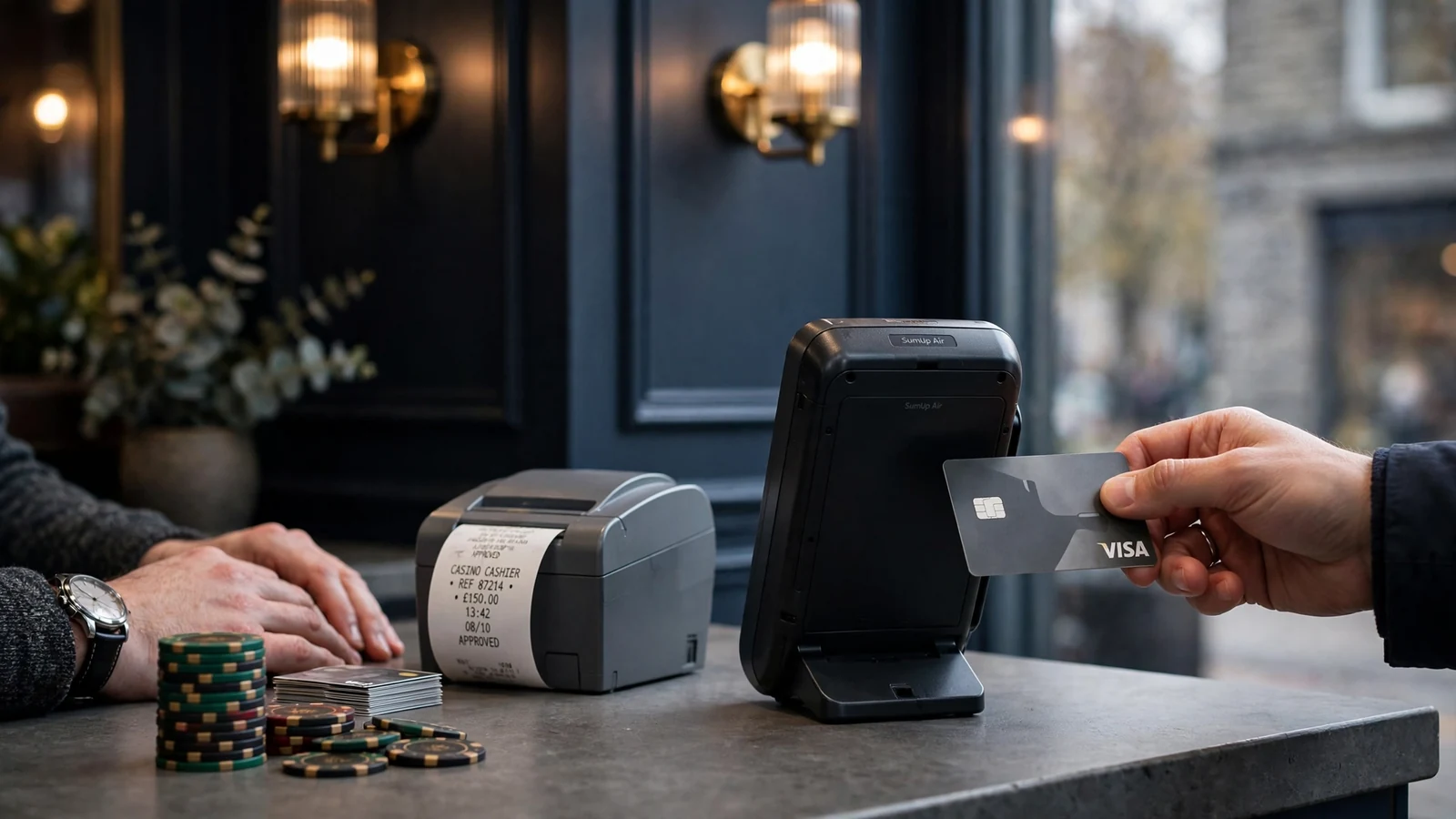
Keep deposits and withdrawals on a consistent route
For a wire transfer casino payment, consistency is a useful security habit: use one account in your own name for casino deposits and withdrawals, rather than moving between accounts without a clear reason. A single, named route gives the payment history a straightforward pattern. That can reduce avoidable questions about who sent the funds and where a payout should go.
This is not a guarantee that a transaction will be accepted or processed without checks. Remote gambling licensees still apply their own controls, and they may ask for information if something in the payment history needs clarification. But a consistent route gives you fewer moving parts to explain. Less ambiguity is the point.
The same principle applies when you choose a wire transfer payment casino route: treat it as a continuing account link, not a one-off workaround. Keep the account details current, and avoid switching to someone else’s account or an unrelated route simply because it appears in a payment menu. If you need to change accounts, check the casino’s instructions before making the next transaction.
A simple personal record can help: note which named account you use and keep confirmation of the payments. That gives you a reference if you need to reconcile a transaction or answer a query. Do not share banking credentials or approve a payment you did not initiate.
There is no need to use several routes to make a casino account look more flexible. One consistent account is often the cleaner option for both security and administration. Choose it for traceability, then keep to it unless the casino’s process requires a change.
What is the fastest withdrawal method for UK casinos?
PayPal, open banking and debit cards connected to fast payout systems are generally among the quickest. The casino’s approval process and whether your account is verified also affect how soon you receive your money.
Do UK casino withdrawals require verification?
Yes, verification may be needed, and first withdrawals can take longer while it is completed. A fully verified account can help avoid delays.
Are Visa and Mastercard deposits definitely debit cards?
Visa and Mastercard debit cards are commonly accepted, but check your cashier to confirm your card product is eligible. UK-licensed casinos do not accept credit-card gambling deposits.
Is Skrill available?
Yes, Skrill is available at some UK-friendly casino sites. Check the cashier to confirm it is offered for your account and transaction.
Which method has the lowest fees?
There is no universal lowest-fee method. Compare casino and provider charges, bank or issuer fees, currency conversion spreads and any network costs for the amount you plan to move.
What is the current minimum deposit?
The minimum deposit usually starts at £10–£20, depending on the payment method.
Are fast casino withdrawals guaranteed?
No. Withdrawal speed depends on the casino’s approval process and whether your account is fully verified; bank transfer delivery can also be affected by cut-off times, weekends and currency conversion.
Prepared by the Rainbow Riches Casino 2 editorial staff.