Casinos That Accept E-Cheques in the UK: What to Check
 Available in GB
E-cheque availability can vary by account, and a method shown on a general payment page may not be available in the UK cashier.

Table of Contents
- What the cashier can—and cannot—confirm about e-cheques
- Check the payment route before you choose a casino
- Deposits and withdrawals are not the same transaction
- Compare payment costs against the amount you plan to move
- Keep account ownership consistent across payments
- Check deposit minimums, maximums and account limits
- Allow for approval and verification before a withdrawal arrives
- Compare e-cheques with other ways to fund an account
- Fast deposits do not guarantee fast payouts
- UK payment rules still apply to every casino cashier
What the cashier can—and cannot—confirm about e-cheques
A casino’s general payment page is not proof that you can deposit by e-cheque. It may describe methods offered in other countries, to other customers, or at an earlier point in time. The cashier is the practical place to check what is available to you when you sign in and select a deposit.
That distinction matters if you are looking for an e-cheque online casino in the UK. A method needs to appear as an available choice in the cashier before you can treat it as an option. If e-cheque is absent, a mention on a general information page, an old review or a payment logo elsewhere on the site does not establish that you can use it.
Read the payment label, not the logo
Payment pages often group methods under broad headings or display familiar brand marks. Neither tells you, by itself, which transaction types are enabled for your account. Even a list that names Visa and Mastercard is not a guarantee that every card product is accepted in the UK; current availability and card eligibility need to be checked in the cashier.
If you’re looking for a UK casino that accepts e-cheques, check the payment options and terms before depositing. This list gives you one available detail to consider: the stated payout speed for each operator.
Payout speed: 1-3 business days BeOnBet lists a payout speed of 1–3 business days. Check its payment terms to confirm whether e-cheques are available to you.
Payout speed: 1-3 business days x3bet lists a payout speed of 1–3 business days. Check its payment terms to confirm whether e-cheques are available to you.
Payout speed: 1-3 business days Zombillion lists a payout speed of 1–3 business days. Check its payment terms to confirm whether e-cheques are available to you.
Payout speed: 1-3 business days Dieselwin lists a payout speed of 1–3 business days. Check its payment terms to confirm whether e-cheques are available to you.
Payout speed: 1-3 business days Britsino lists a payout speed of 1–3 business days. Check its payment terms to confirm whether e-cheques are available to you.
Payout speed: 1-3 business days EvoSpin lists a payout speed of 1–3 business days. Check its payment terms to confirm whether e-cheques are available to you.
Payout speed: 1-3 business days Revery Play lists a payout speed of 1–3 business days. Check its payment terms to confirm whether e-cheques are available to you.
Payout speed: 1-3 business days Chanze lists a payout speed of 1–3 business days. Check its payment terms to confirm whether e-cheques are available to you.
Payout speed: 1-3 business days NightWin lists a payout speed of 1–3 business days. Check its payment terms to confirm whether e-cheques are available to you.
Payout speed: 1-3 business days WinBeast lists a payout speed of 1–3 business days. Check its payment terms to confirm whether e-cheques are available to you.
Apply the same caution to e-cheques. Look for an explicit e-cheque option in the deposit screen, rather than assuming that a bank-related logo or a reference to electronic payments means cheque payments are supported. Similar wording can describe different routes. If the label is unclear, the operator’s payment information or customer support can clarify what that particular option means.
Do not treat a method as available merely because a page says the casino accepts “online payments” or “bank payments”. Those descriptions are too broad to identify an e-cheque route. The useful evidence is a clearly named method that can be selected for your account, with its terms shown before you confirm a transaction.
What a cashier can establish
The cashier can show whether a method is currently presented to you and whether the operator has made it selectable for the transaction you are starting. That is a more concrete check than relying on a generic payment-method list. It still does not turn a vague label into an e-cheque: the method should be identified plainly enough for you to know what you are choosing.
If you are checking from a phone, use the mobile cashier rather than assuming that a desktop payment page describes the same interface. A method may be shown differently on a smaller screen, tucked into a menu, or omitted from the choices presented to your account. A mobile-friendly casino is not automatically a mobile e-cheque casino. The screen has to show the method.


A page that lists e-cheques without explaining whether the option is available to UK customers is not enough to settle the point. Nor is an old account of what another player could use. Payment menus can change, and access can depend on the account or the transaction being made. Check the live cashier while signed in, and read any explanatory text attached to the method.
Avoid turning a possibility into a recommendation
Searches for the best or top e-cheque casinos can suggest that there is a settled group of UK sites offering this route. Do not build a shortlist on that assumption. Unless a casino’s own cashier clearly presents e-cheque as a usable deposit method for you, there is no sound basis for ranking it as an e-cheque option.
That is not a judgement about whether e-cheques are useful in general. It is a limit on what a casino’s public payment information can demonstrate. A site can discuss payments broadly without offering every method to every customer, and a logo can be illustrative rather than a live invitation to pay. Marketing language is not a working cashier.
When a site’s information and its cashier appear to conflict, avoid treating the more expansive claim as confirmation. Check the wording with customer support before depositing, and keep the question specific: does this account have an e-cheque deposit option available in the UK? A clear answer should identify the method, not merely repeat that the casino supports online banking or electronic payments.
- Check the live cashier while signed in
- Look for an explicit e-cheque option
- Confirm details with customer support
- Rely on general payment logos
- Assume “online payments” includes e-cheques
- Trust outdated reviews or general pages
For now, the sensible way to read claims about UK e-cheque casinos is narrowly: accept only what the live cashier names and makes selectable. If it does not show e-cheque, do not infer support from a broad payment list. No guesswork needed.
Check the payment route before you choose a casino
A payment logo on a casino’s general banking page does not establish that the method is available to you. The cashier is the practical check: sign in, open the deposit options and look for the exact route you intend to use. If you are considering an e-cheque, do not treat a broad reference to bank payments or cheques as confirmation that this specific method is supported.
Check while logged in, rather than relying only on a public list. The options shown in your account are the ones to investigate for your intended transaction. If the e-cheque option is absent, ask customer support whether it is available for your account before registering or depositing. A reply should identify the method clearly; a general statement that the casino accepts bank payments does not answer the e-cheque question.
Then check what the cashier allows that method to do. A payment route may be displayed for deposits without being offered for withdrawals. Look for separate deposit and withdrawal menus, and read the relevant payment terms. If the information is unclear, ask support directly: can this exact method be used to deposit, to withdraw, or both? Keep the answer specific to the route, not merely to the payment provider or the casino’s overall banking options.
| Check | What to establish |
|---|---|
| Availability | Is the exact method shown or confirmed for your signed-in account? |
| Transaction direction | Is it available for deposits, withdrawals, or both? |
| Conditions | Are there account or payment-route requirements that affect its use? |
| Confirmation | Does support answer about the named method rather than a broad category? |
That small table is more useful than a long list of payment logos.
The distinction matters when comparing casinos. A site may list Visa, Mastercard, bank transfer, e-wallets or cryptocurrencies in general payment information, but that does not prove that each is enabled for every customer or transaction type. A specialist review can help you identify routes worth checking, but treat it as a starting point: confirm the current details in the casino’s own cashier and terms before making a decision.
For an e-cheque in particular, look for explicit wording. “Bank transfer” is not automatically the same as an e-cheque, and a generic reference to cheque payments may not describe the route available through the cashier. If the operator uses a different label, ask what payment process that label refers to and whether it matches the service you intend to use. Do not infer compatibility from a similar name.
Also check whether the payment route must be linked to a particular account or payment source. A casino may apply anti-fraud and anti-money-laundering controls that return funds to the original source. An alternative route may involve extra verification. This does not establish that every payment option can be used in both directions; it is a reason to confirm the casino’s rules before choosing a route and to avoid assuming that a different withdrawal method will be accepted later.
To properly compare casinos, focus on which cashier confirms the exact route for your specific account and what transactions (deposits, withdrawals, or both) that route allows.
A useful comparison is therefore not “which casino shows the most methods?” but “which cashier confirms the exact route for my account, and what can I do with it?” Record the operator’s wording, whether the option appears after sign-in, and the answer about deposits and withdrawals. If two casinos display similar payment lists, the clearer account-specific confirmation is the stronger basis for your choice.
If the cashier and the written terms appear to conflict, pause and ask support to resolve the discrepancy before sending money. Save the response so you can refer to the precise answer if the payment option or its conditions are unclear later. Do not rely on a general assurance about “banking options” when your question is about one named method.
The right choice depends on your requirement: if you need a route for depositing only, confirm that use; if you also expect to withdraw through it, get explicit confirmation of that as well. The word “available” is incomplete until you know which transaction it covers. Check the route, the direction and the account-specific conditions. No guesswork.
Deposits and withdrawals are not the same transaction
A payment route that works when you add money to a casino account may not be the route used to send winnings back. A deposit moves funds towards the casino; a withdrawal is a separate payment, subject to the operator’s payout procedures and anti-money laundering controls. Treating the two as mirror images can leave you with an unsuitable route even if the initial payment went through smoothly.
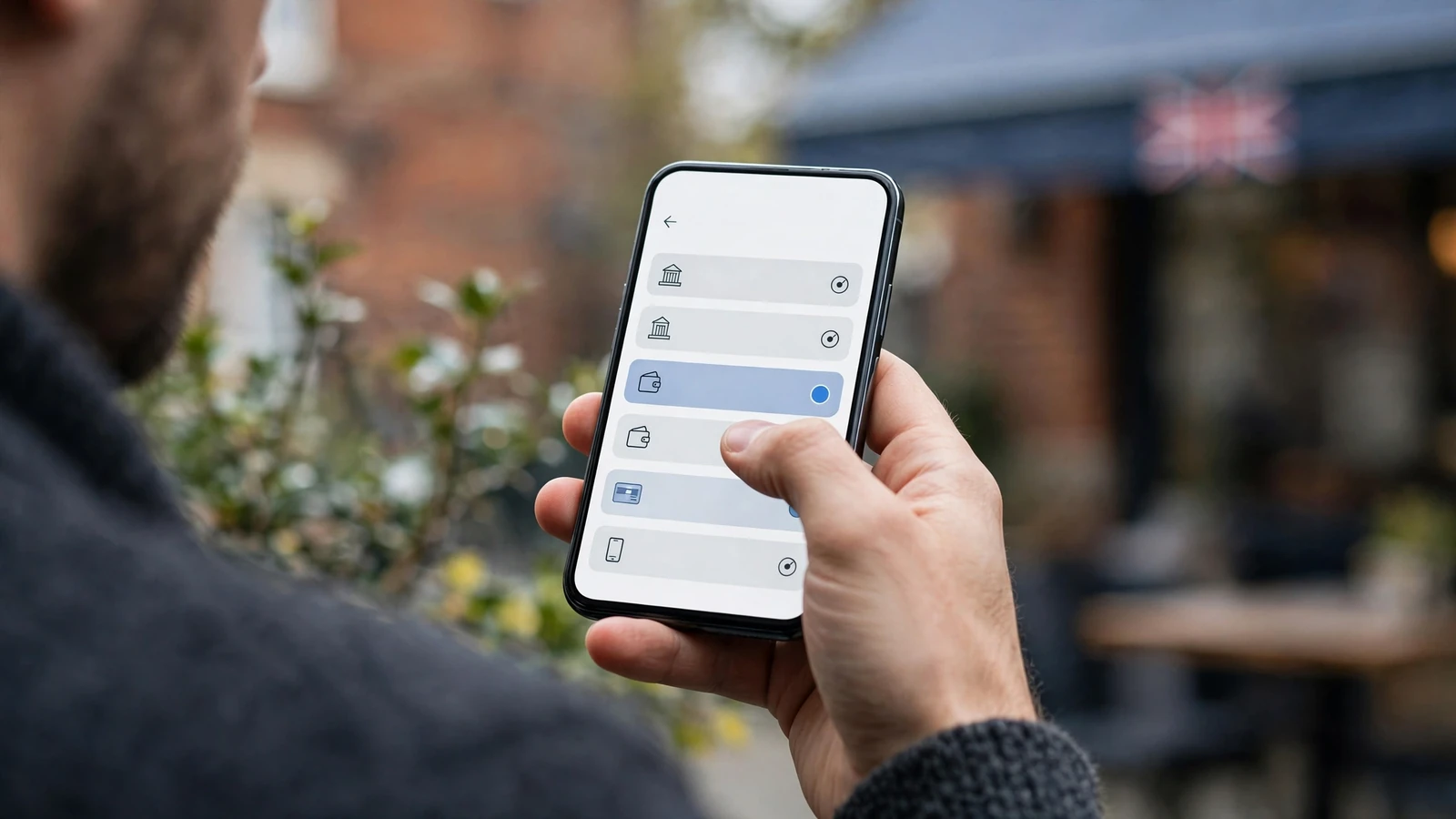
This distinction matters when considering an e-cheque deposit casino in the UK. Seeing a method offered for deposits would not, by itself, establish that it can receive withdrawals. Nor should you assume that the word “e-cheque” describes a single, standard process across different operators. The relevant question is what happens to a payout after the deposit has been made, not simply whether money could be sent in.
Closed-loop rules shape the payout route
UK anti-money laundering rules usually require a casino payout to go back to the original payment source. This is commonly described as a closed-loop control: money is returned through the route from which it came, rather than being sent wherever a player chooses after the event. It helps operators check the movement of funds and reduce the scope for misuse.
For you, the practical consequence is that a deposit method can affect how a later withdrawal is handled. If you deposit using a particular route, the casino may need to return funds to that source, subject to its procedures and the payment provider’s capabilities. The destination is not necessarily a bank account you select at withdrawal time. A different destination may require additional checks or may not be available for that transaction.
That is why “accepted for deposits” and “suitable for withdrawals” are different claims. A method may be useful for funding an account while offering no direct way to receive a payout. In that situation, the operator may explain an alternative route, but you should not assume the alternative is automatic or immediate. The applicable terms and the cashier’s withdrawal instructions determine what you can actually do.
Closed-loop control
An anti-money laundering requirement where casino payouts must be returned to the original payment source used for the deposit.
What this means for e-cheques
If you are considering casinos that accept e-cheque deposits in the UK, think through the exit route before treating the deposit option as a complete payment solution. Ask whether the same e-cheque channel can receive withdrawals, whether winnings must first be returned through the original source, and what happens if that source cannot accept a payout. These are questions about the flow of money after a deposit, not merely the appearance of a payment button.
Do not infer that an e-cheque will behave like a debit card, bank transfer or e-wallet. Each route has its own processing arrangements, and a familiar label does not prove that the payment can travel in both directions. If the operator’s terms do not make the payout path clear, seek a direct answer before depositing. An answer about deposits alone does not settle the withdrawal question.
The same principle applies if a casino offers more than one possible way to pay. Choosing a route because it appears straightforward at the deposit stage can create a mismatch later if the casino’s payout process expects funds to return to the original source. A route that fits both sides of the transaction is a stronger practical choice than one judged only by how easily it accepts money.


Separate the route from the timing
The payment path and the time taken to receive money are related, but they are not the same issue. A payout may need to pass through the casino’s own approval process before it is sent. A specialist review notes that this processing can take longer for a first withdrawal while verification is completed. That does not mean every later withdrawal follows the same timetable, or that selecting a particular deposit method removes the operator’s checks.
Keep the questions distinct. First, establish where a withdrawal would be sent under the casino’s closed-loop rules. Then consider the operator’s stated process for approving it and the steps needed before the money reaches you. Knowing the route does not tell you how quickly it will be completed; knowing a processing estimate does not prove the route is compatible with your deposit method.
A useful comparison is therefore not simply “which method accepts my deposit?” It is “what route will the casino use to return funds, and can that route receive them?” For an e-cheque, get that answer in terms of the operator’s actual withdrawal procedure rather than relying on assumptions drawn from how the payment worked in the other direction.
Before you commit to a deposit, read the withdrawal terms as well as the deposit information. Look for whether payouts are returned to the original source, whether another route may be used when that is not possible, and whether the operator describes any extra checks for an alternative. If the wording is unclear, ask support to explain the path for your intended payment method and keep the response. It is a small step with a direct bearing on whether the method suits the whole transaction.
Payout Path
- A deposit confirms only that money entered the account, not that it can be delivered back through the same channel.
- Closed-loop rules make the distinction between deposit and withdrawal routes critical.
- Always verify the payout path and any original-source requirements before depositing.
A deposit confirms only that money entered the account. It does not prove that the same channel can deliver money back. Closed-loop rules make that distinction important. Verify the payout path first.
Compare payment costs against the amount you plan to move
A payment route with no visible casino charge is not automatically the cheapest. The total can include charges from the casino, the payment provider, your card issuer or bank, currency conversion, and a payment network. A specialist payment review identifies these as separate possible costs, so compare them rather than treating the cashier’s displayed fee as the whole bill.
The amount you plan to move matters. A flat charge takes the same sum from a small transaction as from a larger one, while a percentage-based charge grows with the amount. Currency conversion and network costs can add another layer. The useful comparison is therefore not “Which method has the lowest fee?” but “What would this route cost for my planned transaction, in my account currency?”
Separate visible fees from less obvious costs
Start with the casino’s payment terms and the amount shown in its cashier. Check whether the casino itself charges for the transaction, then look at the provider’s terms and your bank or card account terms. A charge can arise outside the casino, so a cashier showing no fee does not settle the question.

Next, check the currency used for your casino account and for the payment instrument. If the two differ, conversion may take place, and the exchange rate may include a spread: the difference between the rate applied and a reference rate. A specialist payment review cautions that this spread can cost more than a clearly stated flat fee. In other words, “no fee” is not the same as “no cost”.
If a payment route uses a network, check whether that network adds a charge as well. The amount and the point at which it is applied depend on the route, so avoid assuming that the casino or the payment provider is the only party involved. Read the relevant terms before you confirm a transaction.
| Cost to check | Where it may appear |
|---|---|
| Casino charge | Payment terms or cashier |
| Provider charge | Provider’s fee schedule |
| Issuer or bank charge | Card or bank account terms |
| Conversion spread | Applied exchange rate |
| Network charge | Payment or network terms |
This is a checklist, not a promise that every route carries every charge. The point is to trace the transaction from your account to the casino and identify who sets each cost.
Compare like with like
For a meaningful comparison, use the same planned amount and the same currency assumptions for each route. Record any fixed charge, percentage charge, exchange-rate effect and network fee, then total them. If you cannot find a charge in the terms, treat it as unconfirmed rather than silently counting it as zero.
Account currency deserves particular attention. If your casino balance is not in pounds sterling, a payment may be converted on the way in or during another part of the transaction. Confirm the account currency before paying and check which party sets the exchange rate. A rate that looks close to the market rate can still include a spread, and that cost may be less obvious than a line labelled “fee”.
Attention: A “no fee” label in the cashier does not mean there is no cost; currency conversion spreads and provider charges may still apply.
The same comparison applies if you are considering an e-cheque route. Do not infer its cost from the word “cheque” or from another casino’s terms. Look for the charges that apply to the specific payment route and transaction you intend to use. There is no universal lowest-fee method: a specialist payment review recommends comparing casino charges, provider fees, currency spread and network costs against the actual amount.
Make the decision on total cost
Put the routes side by side, but do not rank them on a single advertised fee. One may have a flat charge; another may have no visible casino fee but a provider charge or less favourable conversion rate. The cheaper option depends on the amount, the currencies involved and the terms that apply to your account.
If the cashier or provider does not make a cost clear, ask before proceeding or choose a route whose charges you can establish. A fee comparison is useful only when its inputs are known. Otherwise, the tidy table is just tidy.
Keep account ownership consistent across payments
For an e-cheque casino in the UK, the useful test is not simply whether the payment route appears in the cashier. The account details and the route should belong to the same customer. When they do, basic ownership information is less likely to create avoidable friction around a transaction.


Use your own casino account and a payment account held in your own name. If the details point to different people, the casino may have difficulty matching the transaction to the customer. That can lead to questions or extra steps before the payment is handled. A payment method being available does not make a third party’s account an appropriate substitute.
Consistency also matters across the payment trail. Where possible, use one named account for deposits and withdrawals rather than moving between accounts belonging to you. The cleanest route is often a single account used both ways. That gives the casino a clearer connection between the customer, the incoming funds and any later payout. Simple, not foolproof.
This is relevant when considering an e-cheque casinos UK may list as a payment option: confirm that the route you intend to use is in your name and can be associated with your casino account. Do not assume that a payment route is suitable merely because you can access it. The ownership match is part of the practical fit.
If you use more than one personal payment account, keep the details straight and check which one you used for each transaction. Switching routes can make the account history harder to follow, even when every account belongs to you. A consistent named account is easier to explain and less likely to create avoidable questions than a trail involving several different holders.
Using a single named account for both deposits and withdrawals creates the clearest connection for the casino and reduces avoidable friction.
Before submitting a payment, compare the name on your casino account with the name attached to the payment route. If they do not match, resolve the discrepancy with the casino before sending funds rather than hoping it will pass unnoticed. The aim is not to make a complicated claim about e-cheques; it is to keep the ownership trail clear, with the fewest unnecessary points of confusion.
Check deposit minimums, maximums and account limits
A deposit limit is not one figure. It can depend on the payment method, whether you are looking at a single transaction or a period total, and the status of your account. When comparing casinos that accept e-cheque deposits in the UK, do not assume a method has the same minimum or maximum everywhere. Check the cashier and the operator’s payment terms for the figures that apply to your account.
A specialist review reports that minimum deposits may start at £10–£20, with the amount depending on the selected method. Treat that as a guide to what a review has reported, not as a fixed threshold for every casino or payment route. The amount shown in your cashier is the one that matters before you submit a deposit.
Maximums need the same close reading. A casino may set a cap for one deposit and separate caps for daily or monthly deposits; the permitted amount can also vary with the payment method and account status. A limit displayed for one route does not establish the limit for another. If you plan to make a larger deposit, check the relevant cap before choosing the method rather than assuming that several smaller transactions will be accepted.

Keep these transaction caps separate from the financial limit on your gambling account. The payment method’s minimum and maximum govern how much can be moved through that route. An account-level limit is a control you set for your own gambling spend. One is a cashier condition; the other is a personal boundary.
UKGC rules require remote gambling licensees to prompt new customers to set a financial limit before their first deposit and to make account-level limit controls accessible. Set a limit that reflects what you can afford, then check that it is active in your account. A payment route allowing a larger deposit does not mean that amount is suitable for you, nor does it override the limit you set.
A useful comparison table needs separate columns for method, minimum, maximum per transaction, any period cap, and your account limit. Fill in only figures confirmed in the cashier or account settings. If a cap is unclear, pause and ask the operator before sending money. Guesswork is a poor payment setting.
Allow for approval and verification before a withdrawal arrives
A withdrawal request is not necessarily sent for payment the moment you submit it. A specialist casino-payment review describes the processing time as including the casino’s own approval stage, with account verification also affecting when funds are released. That distinction matters if you are comparing e-cheque casinos for UK players: a payment option alone cannot tell you how long the operator will take to review a payout.
Why the first withdrawal takes longer
First-time withdrawals often involve an additional approval stage where the casino completes account verification and KYC checks before funds are released.
The first withdrawal can take longer when checks are still outstanding. The review notes that verification may be completed as part of this early process. If your account has not been fully verified, the casino may need to finish its checks before approving the request. Later withdrawals may follow a different timetable, but that is not a promise that every subsequent request will be immediate.
Treat any displayed payout estimate as a process with stages, not as a guaranteed arrival time. The casino’s stated processing window may cover its internal review; the time after approval can depend on the payment route. Those are separate parts of the journey. A short estimate that does not explain what it measures is difficult to compare with one that clearly refers to approval.
Before submitting a withdrawal, check the cashier or withdrawal terms for the operator’s current approval information and any account-verification status shown to you. If the casino asks you to complete KYC, follow its instructions and check that the account dashboard confirms completion. Do not assume that depositing successfully means the payout review is finished.
For a planned withdrawal, the useful comparison is therefore not just the payment label. Record whether your account is verified, what the operator says about approval, and whether its estimate covers approval alone or the full journey. If the wording is unclear, ask customer support to clarify the stages before relying on a date. This is especially relevant when you are considering an e-cheque casino payment in the UK: neither the method’s name nor its appearance in a cashier establishes how quickly a withdrawal will be approved.


No approval time can be inferred from a payment method by itself. Check the operator’s current terms and your own account status before treating a payout estimate as a plan. Verification first; certainty later.
Compare e-cheques with other ways to fund an account
When comparing an e-cheque with other ways to fund a casino account, separate deposit access from what the method lets you do afterwards. Paysafecard is a prepaid voucher for deposits only, so it is not a like-for-like alternative if you want one payment route for both paying in and receiving money. Its role is narrower: funding an account, not cashing out.
E-wallets offer a different comparison. Skrill and Neteller are available at some casino sites, but a specialist review reports that they are often excluded from promotions. That is a reason to read the specific offer’s terms before choosing a wallet, rather than assuming a deposit will qualify. Availability and bonus treatment can vary between sites and offers.
| Method | What to compare |
|---|---|
| E-cheque | Confirm its availability and permitted use at the casino you are considering. |
| Paysafecard | Prepaid voucher for deposits only. |
| Skrill or Neteller | Available at some sites; promotion eligibility may be restricted. |
The table is not a ranking: each route has a different practical role. If you want a deposit-only option, a voucher may fit that purpose. If you are considering an e-wallet, check whether the casino accepts it and whether using it affects the promotion you intend to claim. For an e-cheque, do not treat a general mention of the method as confirmation that it is available to you.
The deciding criterion is the function you need, not the method’s label. A deposit-only voucher cannot replace a route that must also handle withdrawals; a wallet’s promotional terms may matter more than its name. Compare the cashier and the relevant offer terms before settling on an alternative. Different jobs, different tools.
Fast deposits do not guarantee fast payouts
A payment route can feel immediate when you put money in and still be slow when you take money out. A specialist review notes that a card deposit may arrive instantly, while a payout can take several business days. That contrast matters if you are comparing casinos by how quickly the cashier accepts a deposit: the deposit time tells you little about when withdrawn funds will reach your bank.
Credit Card Ban
Credit-card payments for gambling are strictly prohibited in the UK; using them, including through money service businesses, violates the law.
Bank transfers have their own timing variables. A specialist review identifies the bank’s cut-off times, weekends and currency conversion as factors that can affect delivery. A transfer started after a cut-off may not move through the banking process at the same point as one submitted earlier. Weekends can also interrupt the working-day timetable, while a currency conversion adds another step before the money appears in your account.
The useful comparison is therefore not simply “instant” versus “slow”. Separate the stages: how quickly the casino receives a deposit, how long a payout route takes after it is sent, and whether the transfer has to pass through currency conversion. A card may be the quicker way to fund play, yet that does not make it the quicker way to receive a payout. Bank transfer delivery may also vary with timing and currency, even when the casino has already initiated it.
If timing is your priority, read the cashier’s payment information for the route you intend to use, then consider when you would make a withdrawal and where it would be sent. Treat a fast deposit as a deposit feature, not a promise about payouts. Different clocks.
UK payment rules still apply to every casino cashier
A payment option appearing in a cashier does not override the rules that apply to gambling in Britain. Credit-card payments for gambling are prohibited, and the ban has not been relaxed since it took effect on 14 April 2020. This applies to deposits at UK-licensed casinos, including attempts to route credit-card funds through a money service business. A debit card is a different product, but the card type and eligibility still need to be clear before you use it.


That distinction matters when comparing e-cheques with other routes. Do not treat a payment label as proof that any source of funds is acceptable. Remote gambling licensees must apply the relevant restrictions to the payment route, not simply accept a transaction because a provider or wallet can process it. Credit cards remain off the table.
There is also a required step before a new customer makes a first deposit. UK Gambling Commission rules require remote gambling licensees to prompt the customer to set a financial limit before that deposit can be made. They must also make account-level limit controls accessible, so you can review or adjust your limits through the account.
This limit-setting prompt is not a payment-method minimum or maximum. It is a separate customer protection measure, and it applies regardless of whether the cashier offers a bank transfer, card, e-wallet or another route. If you are considering a newly available payment service, the same rules still apply: the cashier cannot make the initial limit-setting step optional.
For a UK casino, compare payment routes only within those boundaries. The practical test is not merely whether a method is displayed, but whether it can be used lawfully for gambling and whether the account presents the required limit controls before your first deposit. The card ban is not a footnote.
Why can a fast payout casino still delay my withdrawal?
Your payout can still take longer because the casino must approve it internally, and first withdrawals may involve verification. A fast payment method does not remove those steps.
Do UK casino withdrawals require verification?
Yes, verification may be needed, particularly before a first withdrawal. Make sure your account details and payment method belong to you to reduce avoidable delays.
What is the fastest withdrawal method for UK casinos?
PayPal, open banking services and debit cards linked to fast payout systems are generally among the quickest. The casino’s approval process and whether your account is verified also affect the time.
What is the current minimum deposit?
The minimum deposit usually starts at £10–£20, depending on the payment method.
Why must withdrawals return to the deposit method?
Returning funds to the original payment source is a common anti-fraud and anti-money-laundering control. An alternative route may require additional verification.
Are Visa and Mastercard deposits definitely debit cards?
No. Visa and Mastercard are commonly accepted, but the cashier determines which card products are eligible for your account; credit cards cannot be used for gambling in the UK.
Is Skrill available?
Yes, Skrill is available at some UK-friendly casino sites, though it may be excluded from promotions.
Created by the ”Rainbow Riches Casino 2” editorial team.