UK Casino Sites and Credit Card Gambling: The Rules
 Available in GB
UK rules bar credit-card gambling deposits, while other payment methods may be available and can follow different routes for deposits and withdrawals.
Table of Contents
- Can You Use a Credit Card to Gamble Online in the UK?
- Why the UK Credit Card Gambling Ban Still Applies
- When the Ban Began—and What It Means for Gambling Payments
- Which Payment Methods Can You Use Instead?
- How to Check Whether a Casino Accepts Your Payment Method
- Compare Payment Costs by the Amount You’ll Deposit
- Deposits, Withdrawals and the Route Your Money Takes
- Why GamStop Status Does Not Make Credit-Card Deposits an Option
- Check Deposit Limits and Account Controls Before You Play
- Playing Online Slots Without a Credit-Card Deposit
Can You Use a Credit Card to Gamble Online in the UK?
No. A UK-licensed casino cannot accept a credit-card payment for gambling. That applies whether you are trying to fund an online casino account, play casino games, or make a deposit for slots. The restriction is not a matter of an individual casino choosing to be cautious: remote gambling licensees are not permitted to take credit-card payments for gambling.
The route the money takes does not change the answer. If you use a money service business to move credit-card funds to a gambling account, that does not make the deposit acceptable. Nor can a casino accept a wallet payment for gambling where the wallet allows credit-card funds to be used for that purpose. Adding an intermediary is not a workaround.
That can make payment labels confusing. A cashier may show familiar card brands, but a brand name alone does not tell you whether your particular card product can be used. The important distinction is between a credit card and another payment product; a credit card cannot be used for a gambling deposit at a UK-licensed casino. If you are unsure what kind of card or funding source you have, do not assume that a successful-looking payment option overrides the restriction.
If you’re looking for a UK casino that accepts credit cards, check the site’s current payment options and eligibility before signing up. The information below gives you one specific detail to consider: each listed operator’s stated payout speed.
Payout speed: 1-3 business days BeOnBet lists a payout speed of 1–3 business days. You’ll need to check its current payment options separately to confirm whether it suits your needs.
Payout speed: 1-3 business days x3bet lists a payout speed of 1–3 business days. You should verify the available payment methods directly if you’re looking to use a particular option.
Payout speed: 1-3 business days Zombillion lists a payout speed of 1–3 business days. You’ll need to check its current payment options to see whether they match what you’re looking for.
Payout speed: 1-3 business days Dieselwin lists a payout speed of 1–3 business days. If payment method is important to you, confirm the options available before signing up.
Payout speed: 1-3 business days Britsino lists a payout speed of 1–3 business days. You should check its current payment options directly before deciding whether it fits your requirements.
Payout speed: 1-3 business days EvoSpin lists a payout speed of 1–3 business days. You’ll need to verify its available payment methods if you have a specific one in mind.
Payout speed: 1-3 business days Revery Play lists a payout speed of 1–3 business days. Check its current payment options directly to find out whether your preferred method is available.
Payout speed: 1-3 business days Chanze lists a payout speed of 1–3 business days. You should confirm the current payment options before signing up, especially if you need a particular method.
Payout speed: 1-3 business days NightWin lists a payout speed of 1–3 business days. You’ll need to check its payment options directly to confirm whether it accepts your preferred method.
Payout speed: 1-3 business days WinBeast lists a payout speed of 1–3 business days. Verify its current payment options if you’re looking for a specific way to pay.
The same answer applies if your plan is specifically to play online slots. A credit card is not an allowed way to fund a UK-licensed casino account for slot play. The game does not alter the payment rule: a deposit remains a gambling payment whether the balance is intended for slots or another casino game.
For clarity, the restriction concerns credit-card payments for gambling, not every transaction made with a card. But that distinction is not permission to route credit through another service. The key question is whether credit-card funds are being used to fund gambling. If they are, the casino must not accept the payment, including where a money service business or an eligible wallet sits between the card and the gambling account.
The regulator introduced the ban on 14 April 2020, and it has not been relaxed. So a page, advert or cashier description suggesting that a UK-licensed casino accepts credit cards for gambling should not be treated as proof that the route is permitted. A payment method being visible in a menu is not the same as a lawful way to fund play.
Keep the distinction practical: you cannot use a credit card to deposit at a UK-licensed online casino, and you cannot make the same deposit acceptable by passing the funds through a money service business. The rule covers the funding route, not merely the button you press at checkout. A workaround is still the same payment.

If your question is whether a credit card can be used at a casino in the UK, the answer for a licensed online casino is no. That remains true for a deposit intended for slots and for credit-card funds routed through an intermediary. Check the nature of the payment product rather than relying on a broad card-brand label. The restriction is clear; the cashier’s wording may be less so.
Why the UK Credit Card Gambling Ban Still Applies
The UK credit card gambling ban remains part of the rules that remote gambling licensees must follow. It is not a temporary restriction or an operator-by-operator policy: a UK-licensed casino cannot accept credit-card payments for gambling, and the rule has not been relaxed.
That distinction matters when you assess a casino’s payment options. A site may accept some forms of card payment without accepting credit cards. The word “card” alone does not tell you whether a payment route is permitted; the relevant question is whether the money used for gambling is being supplied through credit. A UK licence does not make a prohibited credit-card route acceptable.
The restriction also cannot be avoided simply by inserting another service between a credit card and the casino. It covers credit-card funding routed through a money service business. Likewise, a remote operator cannot accept a wallet payment where that wallet allows credit-card funds to be used for gambling. Changing the label or adding a step does not change the source of the funds.
Credit Card Ban
A UK-licensed casino cannot accept credit-card payments for gambling, regardless of whether a money service business or e-wallet is used as an intermediary.
This is why a “pay by credit card” option should not be treated as an ordinary feature of a UK-licensed casino. If a payment arrangement would let you use credit-card funds for gambling, the licence does not create an exception. The rule concerns the payment’s funding route, not just the name shown beside a button.
The UK regulatory framework also makes the operator’s status relevant. Remote gambling businesses serving the British market must hold the appropriate Gambling Commission licence, wherever they are based. A casino operating outside that system is not a UK-licensed casino, and its own payment claims do not alter the restriction that applies to licensed operators. For a UK customer, “available somewhere online” and “permitted at a UK-licensed casino” are different tests.
The practical comparison is therefore not between casinos that do and do not choose to accept credit cards. Among UK-licensed operators, credit-card payments for gambling are not an available lawful option. Differences between operators concern the payment methods they do permit, not a right to make an exception to the ban.
Keep the categories separate: a payment method can involve a card without being a credit-card payment, while a wallet can still be unsuitable if it enables credit-card funds to reach gambling. The route matters. A familiar brand or a convenient checkout does not, by itself, establish that credit funding is allowed.
The ban’s continuing force also means that old descriptions of a casino’s payment facilities should not be read as proof that credit-card gambling is now permitted. The rule remains in place; a claim that a particular route bypasses it does not change the operator’s obligations. For your decision, the useful dividing line is simple: use only a route the licensed operator permits that does not rely on credit-card funds for gambling.
No exception by relabelling.
When the Ban Began—and What It Means for Gambling Payments
The UK credit-card gambling ban took effect on 14 April 2020. The regulator introduced the restriction on that date, and it remains in force; it has not been relaxed since. So the date is not merely a point in the history of gambling payments. It marks the start of a rule that still determines what UK-licensed casinos can accept for gambling.
That distinction matters when you encounter older pages, archived promotions or general payment guides. A method described as available before the ban may no longer be a permitted way to fund gambling at a UK-licensed site. Likewise, a page that mentions a credit card without showing when its information was checked may not describe the current position. The date gives you a useful reference point: material written before 14 April 2020 cannot establish what is allowed now.
The rule’s continuing status also means that the passage of time has not created an exception. A casino’s branding, payment page or general list of accepted cards does not change the restriction. The relevant question is whether a payment can be used for gambling under the rules that apply to the operator—not simply whether a card is recognised for some other transaction.
When checking information, look for a clear distinction between a payment card being mentioned and credit-card payments for gambling being accepted. Those are not interchangeable claims. An old page may describe a broader range of card payments, while a current cashier may show the options available under the present rules. The date of publication and the specific purpose of the payment both matter.
Ban Effective Date
The restriction on credit-card payments for gambling was introduced by the regulator on 14 April 2020 and remains in force.
This is also why an answer about the ban’s history should not be mistaken for a list of currently acceptable methods. The restriction began on a fixed date and remains unchanged; deciding what you can use instead is a separate matter. For the question of timing, the answer is direct: the regulator introduced the ban on 14 April 2020, and it still applies.
If a source suggests that credit cards have since become acceptable for gambling at a UK-licensed casino, check whether it is current and whether it is actually discussing gambling payments. A general reference to card acceptance is not enough to show that the ban has ended. The recorded date remains the dividing line, not an indication that the restriction was temporary. No reversal.
Which Payment Methods Can You Use Instead?
For a UK-licensed casino, the practical alternatives to a credit card are debit cards, bank-based payments, eligible e-wallets and prepaid vouchers. They are not interchangeable: some support both deposits and withdrawals, while others are deposit-only or may affect bonus eligibility.
Debit cards
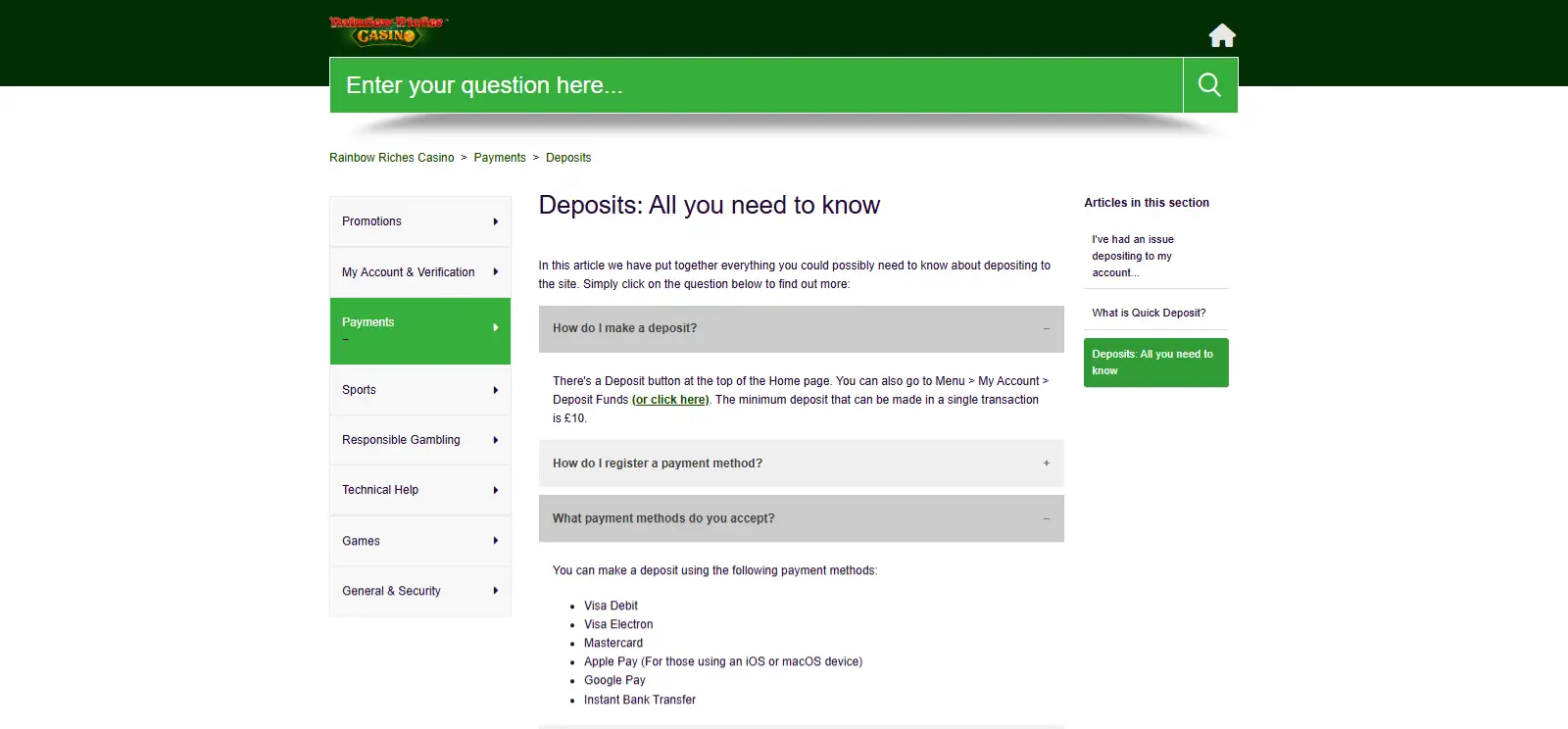
Debit cards are a familiar option, and UK casinos commonly accept Visa and Mastercard debit cards. The money comes from the balance in your bank account rather than a credit facility. That distinction matters: a card carrying a familiar brand name is not automatically eligible, and a credit card cannot be used for gambling deposits at a UK-licensed casino.
Bank transfers and open banking
Bank transfers and open-banking services connect a payment to your bank account. A specialist review describes these methods as capable of providing instant deposits and fast withdrawals at many sites. That is not a promise for every casino or transaction: availability and processing depend on the particular service and operator. Check that the cashier offers the method for both depositing and withdrawing before treating it as a complete payment route.
E-wallets
PayPal, Skrill and Neteller are examples of e-wallets you may encounter, although the options vary between casinos. A specialist review describes PayPal as popular for speed and convenience, but notes that it may be excluded from bonus eligibility. A separate specialist review reports that Skrill and Neteller can also be excluded from promotions. Read the promotion’s payment terms before opting in; a deposit can go through while remaining ineligible for a bonus.

There is an important condition for any wallet: do not use it for gambling if it allows credit-card funds to be used for the transaction. UK remote gambling licensees cannot accept credit-card payments for gambling through a money service business or a wallet that enables this route. Use only a permitted funding source.
Prepaid vouchers
Paysafecard is a prepaid voucher and is deposit-only. That makes it different from a bank-linked method: it can put funds into an account, but it is not a withdrawal route. If you choose it, consider separately how you would receive any payout; the cashier’s available options determine what is possible.
The useful comparison is not simply which method appears in the cashier. Consider whether it accepts your funding source, supports the transaction you need, and fits any promotion you intend to use. A method that works for deposits alone may be less suitable if you want one route for both directions. Check the terms first. No guesswork.
Commonly accepted via Visa and Mastercard; funds are taken directly from your bank balance.
Direct connections to bank accounts that may offer instant deposits and fast withdrawals.
Services like PayPal, Skrill, and Neteller, though some may be excluded from bonus eligibility.
Deposit-only options such as Paysafecard; these cannot be used for withdrawals.
How to Check Whether a Casino Accepts Your Payment Method
A payment logo on a casino’s homepage is a starting point, not confirmation that the method will work for your account. Availability can depend on the casino’s current cashier options and, for cards, on the type of card you hold. Check the cashier before making a deposit.
A specialist casino review lists Visa and Mastercard among the payment methods offered by the sites it covers. That does not establish that either card will be available to every UK customer, or that every Visa or Mastercard product is eligible. The cashier is the place to verify what the casino currently accepts.
Check the payment option, not just the logo
Open the cashier and look for the exact method you intend to use. If you plan to pay by card, check that the option is shown for your account and confirm whether the casino accepts your particular card product. A Visa or Mastercard debit card is not the same as a credit card for this purpose: UK-licensed casinos cannot take credit-card payments for gambling.
If the cashier does not make the card type clear, check the casino’s payment terms or ask customer support before trying to deposit. Do not treat a general statement that “Visa is accepted” or “Mastercard is accepted” as proof that a credit card is permitted. The brand identifies the card network; it does not, by itself, tell you whether the card is debit or credit, or whether that product is eligible.
This distinction matters when you are looking for a UK casino that accepts cards. A card logo may refer to debit-card deposits, not credit-card gambling. The wording can be brief. The practical difference is not.
- Check the exact method in the cashier
- Confirm your card is a debit product
- Ask support if the card type is unclear
- Rely on a general logo on the homepage
- Assume “Visa accepted” means credit cards
- Test a deposit with an ineligible card
Confirm the details for your account
Use the cashier as your final check, even if a casino’s public payment page or a review shows the method. Look for the method among the available deposit options, then read any conditions attached to it. If you cannot tell whether your card is eligible, pause and ask the operator rather than testing it with a transaction.
Also confirm the account currency before your first deposit. A specialist review reports GBP support for the sites it covers, but that does not prove the currency setting for every casino account or customer. If your account is set to a different currency, a transaction may involve conversion. Check the currency shown in your account and cashier before proceeding.
Keep the details consistent: use a payment method held in your own name and make sure the account information matches. That simple check can reduce avoidable questions about who owns the payment route.
A short compatibility check
Before you deposit, confirm that:
- The method appears in the cashier for your account.
- The card is a permitted debit product, not a credit card.
- Any stated conditions cover your specific card or payment account.
- Your account currency is the one you intend to use.
If a method is absent, unclear or described differently across the cashier and payment terms, do not assume it will work. Ask the casino to clarify first. That is a better check than finding out through a declined payment.
Compare Payment Costs by the Amount You’ll Deposit
A payment method with no visible charge is not necessarily the least expensive. To compare costs, use the amount you actually plan to deposit and check every part of the transaction: the casino’s charge, the payment provider’s fee, any issuer or bank fee, currency conversion and network costs. A specialist review identifies these as possible charges, but the fee that applies depends on the payment route and its terms.
For UK-licensed casinos, credit-card payments for gambling are not an option. Cost comparisons should therefore focus on permitted payment methods, rather than treating a credit-card deposit as a route to price up. A fee-free label at the cashier tells you only about the casino’s own charge; it does not settle what your bank, provider or currency conversion may cost.
Compare like with like
Start with the deposit amount you have in mind, then check the relevant terms for each payment method. The useful comparison is the total cost of moving that amount into your gambling account—not simply the fee shown beside a method.
| Cost to check | What to look for |
|---|---|
| Casino charge | Whether the cashier applies a fee to the deposit |
| Provider charge | Any fee set by the bank, e-wallet or other payment service |
| Issuer or bank charge | Whether your own account terms add a transaction fee |
| Currency conversion | The exchange rate used and any spread built into it |
| Network cost | Any charge associated with processing the payment |
A specialist review notes that a conversion spread can cost more than a visible flat fee. That is why a method advertised without a transaction charge may still be more expensive overall if it converts the deposit at a less favourable rate. Compare the amount that would be deducted from your account with the amount credited to the casino balance, after checking which exchange rate and charges apply.
Check the currency before comparing
If the casino account and your payment account use different currencies, conversion may affect the final cost. Confirm the account currency and find out whether conversion is handled by the casino, the payment provider or your bank. The party handling it can determine which rate and fees apply. Comparing only the fee displayed by the casino misses any spread applied elsewhere in the route.
If both sides use the same currency, conversion may not be part of that transaction, but other charges can still apply. Read the cashier information alongside the terms from your payment provider and bank. If a fee is unclear, do not assume it is zero; check before confirming the deposit.
Choose by total cost, not by label
There is no payment method that is cheapest for every player or every deposit amount. A flat charge can weigh more heavily on a smaller transaction, while a percentage-based cost or exchange-rate spread can make a larger one more expensive. The result depends on the actual amount and the terms applying to your accounts.
Hidden Costs
A “fee-free” label at the casino only refers to the operator’s charge; your bank, provider, or currency conversion may still incur costs.
For each method available to you, record the casino charge, provider or bank charge, currency impact and network cost. Then compare the total for the same intended deposit. A specialist review also cautions against naming one method as the universal low-cost choice: the relevant criterion is the complete cost for your transaction.
Keep the comparison separate from convenience or speed. Those may matter to you, but they do not reduce a fee. Nor does a payment method become suitable simply because its charges look low; it must be available in the cashier and permitted for gambling. The cheapest route is the one with the lowest total cost for your circumstances, not the one with the neatest fee label.
Deposits, Withdrawals and the Route Your Money Takes
A deposit and a withdrawal are separate stages, with different checks and processing times. A debit-card deposit may appear in your casino balance straight away, but that does not mean a later payout will reach your bank at the same speed. A specialist payment review describes card deposits as potentially instant and withdrawals as taking several business days; treat that as an illustration, not a timetable for every casino or customer.
The cashier’s stated processing time is only part of the journey. After you request a withdrawal, the casino must review and approve it before the payment provider or bank can complete the transfer. The casino’s internal process and the status of your account verification can therefore affect when the money arrives. An account that has already passed KYC may move through the review differently from one where checks are still outstanding.


Why a payout may go back the way it came
UK anti-money laundering rules generally mean that winnings are returned to the original payment source. This closed-loop control helps operators confirm where funds came from and where they are going. It also means you should not assume that you can deposit using one route and freely choose another for the payout.
The route may not always look identical at both ends. A payment service or card product may not support withdrawals, or the casino may need to use another eligible route after checking the transaction. If that happens, the alternative can involve further verification. Check the cashier’s withdrawal instructions before depositing, rather than treating a displayed deposit option as proof that it can receive a payout.
Using a payment account in your own name, with details that match your casino account, can reduce avoidable questions about who owns the funds. A mismatch does not automatically explain what will happen, but it can mean the operator needs to establish ownership before processing a withdrawal. Keep access to the account or card used to deposit, since the casino may need it to confirm the return route.
First withdrawals and verification
A first payout can take longer while the casino completes verification. KYC checks may require you to confirm your identity or the ownership of a payment method. If the operator asks for information, responding promptly can help prevent extra delay; it does not remove the casino’s need to review and approve the request.
Before choosing a payment route, check three separate details in the cashier: whether it accepts deposits, whether it can receive withdrawals, and what the operator says about processing. Then account for the bank or provider’s part of the transfer. A casino’s approval is not the same as money being available in your account.
Why payouts return to the source
UK anti-money laundering rules generally require winnings to be returned to the original payment source. This closed-loop control allows operators to verify the origin and destination of funds.
The practical comparison is not simply “fast deposit” versus “slow deposit”. Consider how the route handles both directions, whether it is tied to an account you can still access, and whether verification is complete. A quick deposit followed by a longer payout is entirely possible. Speed is only one part of the route.
Why GamStop Status Does Not Make Credit-Card Deposits an Option
GamStop status and payment eligibility are separate issues. A site’s connection to GamStop does not create an exception to the UK restriction on credit-card payments for gambling. If a casino serves customers in Great Britain under a UK Gambling Commission licence, it cannot accept a credit card for a gambling deposit simply because it is not on GamStop.
The restriction has applied since 14 April 2020 and has not been relaxed. It concerns the payment route, not the casino’s relationship with a self-exclusion scheme. A credit-card deposit does not become acceptable when the site is described as a non-GamStop casino. Nor should a wallet be treated as a workaround if it allows credit-card funds to be used for gambling.
That distinction matters when you assess claims about online casinos not linked to GamStop that supposedly accept credit cards. A payment logo or promotional claim does not change the rule. If the site is a UK-licensed casino, credit-card gambling deposits remain off the table. If its status is unclear, the claim is not evidence that the route is permitted.


The term “not on GamStop” also does not, by itself, tell you whether a casino is authorised to serve people in Great Britain. Remote gambling businesses offering services to British customers must hold the relevant UK Gambling Commission licence, regardless of where the business is based. GamStop status and licensing status are not interchangeable checks.
So separate the two questions: is the operator licensed to serve the British market, and which payment methods can it lawfully accept? The first is about regulatory authorisation; the second is governed by the credit-card restriction. Treating one answer as if it settled the other is the mistake.
If your reason for looking beyond GamStop is to find a credit-card deposit route, the premise does not hold. A site’s exclusion from a self-exclusion scheme does not make credit-card gambling permissible. Check the operator’s regulatory position rather than relying on a label, and do not use a credit-funded wallet as a substitute. Different label. Same restriction.
Check Deposit Limits and Account Controls Before You Play
Before depositing at a UK-licensed casino, check two separate things: the amount its cashier will accept and the financial controls attached to your account. They serve different purposes. A payment limit restricts a transaction or the use of a particular payment method; an account-level limit is a control you set for your gambling activity.
A specialist review puts the minimum deposit at £10–£20, depending on the payment method. Treat that as a guide to what you may encounter, not a promise that every cashier will offer the same threshold. The figure shown beside a method in the casino’s cashier is the one to check before you start a transaction.
Deposit Preparations
- Check the minimum and maximum deposit for the chosen method
- Verify the transaction ceiling for your account status
- Set a financial account-level limit as prompted
- Confirm the account currency matches your payment source
Maximum deposits can be set per transaction, per day or per month. The available ceiling may depend on both the payment method and your account status, so a limit shown for one route may not apply to another. A payment provider can also impose its own restrictions. Check the casino’s cashier and any applicable provider terms rather than assuming that a high account-level allowance means one large payment will be accepted.
These distinctions matter if a deposit is declined. The cause could be the casino’s transaction ceiling, a method-specific cap, a provider restriction or an account control—not necessarily a problem with the account itself. Check which limit applies before trying again; repeated attempts do not clarify the rules.
Set an account limit before depositing
UK Gambling Commission rules require remote gambling licensees to prompt new customers to set a financial limit before their first deposit. They must also make account-level limit controls accessible. This is a required account safeguard, not simply another payment-provider cap.

Read the prompt and decide what limit is appropriate for you before funding the account. If you want to review or change your controls later, look for the limit settings in your account rather than in the payment cashier. The cashier governs what can pass through a selected payment route; account controls govern the limits set for your gambling account.
A simple check helps keep the two separate: confirm the minimum and maximum shown for your chosen method, then review your account’s financial controls. Neither tells you what the other is. Keep that distinction clear.
Playing Online Slots Without a Credit-Card Deposit
If you are looking to play online slots at a UK-licensed casino, a credit card cannot be used to fund your gambling. The restriction applies to slot deposits just as it does to other casino games. It is not a matter of finding an operator whose cashier happens to offer a different card option: remote gambling licensees must not accept credit-card payments for gambling.

The rule took effect on 14 April 2020 and has not been relaxed. A credit card linked to a payment service is not a workaround if the service allows credit-card funds to be used for gambling. The payment route does not change what the money is being used for.
That distinction matters when a cashier displays familiar payment brands. A card logo alone does not tell you whether a particular card product is eligible, and it does not make credit funding permissible. Check the payment details for a permitted method and use a source of funds that is not credit-card funded for gambling. No clever detour.
Rules that apply to online slots
Payment is only one part of the rules for British online slots. Autoplay is banned, so you must start each spin yourself rather than set the game to keep spinning automatically. Each spin must also last at least 2.5 seconds. These requirements apply to the game’s operation; they do not create an exception to the payment restriction.

If a slot page or game screen appears to offer automatic play, do not assume that the feature makes it acceptable under British rules. The relevant point is that the spin must be initiated manually and meet the minimum duration. A fast-looking animation is not a reason to treat a credit-card deposit as permitted.
Before depositing, distinguish the game rules from the cashier rules. The former govern how online slots can operate; the latter govern which funds a remote gambling licensee may accept. A debit card is not the same as a credit card, but you should still confirm that the cashier accepts your particular payment method and that it is not being funded by credit for gambling.
The practical answer is straightforward: you can play slots without a credit-card deposit, but not by routing credit-card funds through another payment service. Choose an eligible non-credit payment route, then check the casino’s slot rules and controls before you play.
Why must withdrawals return to the deposit method?
Returning funds to the original payment source is a common anti-fraud and anti-money-laundering control. Using a different source may require additional verification.
What is the fastest withdrawal method for UK casinos?
PayPal, open banking services, and debit cards linked to fast payout systems are generally among the quickest options. The casino’s approval process and your verification status also affect how quickly you receive the money.
Are Visa and Mastercard deposits definitely debit cards?
No. Visa and Mastercard are card brands, so the brand alone does not identify your card product; check the card type and the casino cashier’s eligibility before depositing. UK-licensed casinos cannot accept credit-card payments for gambling.
Can I deposit in GBP?
Yes, GBP is supported at the listed sites. Check your account currency before your first transaction to avoid conversion.
What is the current minimum deposit?
The minimum deposit usually starts at £10–£20, depending on the payment method.
Which method has the lowest fees?
There is no universally cheapest method. Compare the casino’s charges, payment-provider or bank fees, any exchange-rate spread, and network costs for your transaction.
Is Skrill available?
Yes, Skrill is available at some UK-friendly casino sites and remains a common deposit method. It may be excluded from promotions.
Why can a fast payout casino still delay my withdrawal?
A casino must first approve the withdrawal, and first payouts can take longer while verification is completed. Your account’s verification status and the casino’s internal processing time affect the delay.
Created by the ”Rainbow Riches Casino 2” editorial team.