£10 Minimum Deposit Casinos in the UK: What to Check
 Available in GB
A cashier’s minimum is separate from account-opening and withdrawal rules, and the amount accepted can vary by casino and payment route.

Table of Contents
- What a £10 Minimum Deposit Actually Tells You
- How the Minimum Works Across Online and Mobile Casinos
- Choose by the Deal You Can Actually Use
- What “Not on GamStop” Means for a £10 Deposit
- How Far £10 Goes on Slots
- The Bonus Conditions Behind a £10 Deposit
- When a £10 Minimum Applies Across Payment Methods
- Check the Cashier Rules Before You Deposit
- Depositing £10 for Real-Money Play
- PayPal and Other Payment Fees at the £10 Level
What a £10 Minimum Deposit Actually Tells You
A £10 minimum deposit is the smallest amount a casino’s cashier will accept for a deposit under the terms shown to you. It does not tell you the minimum amount needed to create an account, nor does it guarantee that the same amount can later be withdrawn. Those are separate stages, with separate rules.
For UK casinos that accept direct banking, a specialist review describes £10 as the common cashier minimum, while noting operators at £5 and £20. Some casinos accept less, with deposits from £1 available at certain sites. Treat these figures as a starting point for checking a particular cashier, not as a promise that every site or payment route will offer the same choices.
The difference matters when you compare minimum deposit casinos in the UK. A £10 threshold may suit you if you have already decided how much to set aside, but it is not automatically the most flexible option. A £5 minimum lets you fund an account with less; a £20 minimum means that £10 will not be enough for the first deposit. Where a smaller amount is accepted, it can make the initial transaction easier to control, though it does not tell you anything by itself about the other account rules.
When choosing a casino with a £10 minimum deposit, check the deposit requirement as well as how quickly withdrawals are paid. The available detail here is each operator’s stated payout speed.
Payout speed: 1-3 business days BeOnBet lists a payout speed of 1–3 business days. Check its minimum deposit separately to confirm whether it suits your £10 budget.
Payout speed: 1-3 business days x3bet lists a payout speed of 1–3 business days. You’ll need to check its minimum deposit separately for the £10 requirement.
Payout speed: 1-3 business days Zombillion lists a payout speed of 1–3 business days. Its minimum deposit isn’t specified here, so check that before depositing.
Payout speed: 1-3 business days Dieselwin lists a payout speed of 1–3 business days. Check the casino’s minimum deposit separately to see whether it matches your £10 limit.
Payout speed: 1-3 business days Britsino lists a payout speed of 1–3 business days. The available information doesn’t state its minimum deposit, so verify that separately.
Payout speed: 1-3 business days EvoSpin lists a payout speed of 1–3 business days. Check its minimum deposit directly to confirm whether you can start with £10.
Payout speed: 1-3 business days Revery Play lists a payout speed of 1–3 business days. Its minimum deposit isn’t provided here, so check it before choosing.
Payout speed: 1-3 business days Chanze lists a payout speed of 1–3 business days. You’ll need to verify its minimum deposit separately against your £10 budget.
Payout speed: 1-3 business days NightWin lists a payout speed of 1–3 business days. Check its minimum deposit separately, as that detail isn’t available here.
Payout speed: 1-3 business days WinBeast lists a payout speed of 1–3 business days. Confirm its minimum deposit separately to find out whether it accepts a £10 starting amount.
Deposit threshold versus account access
Opening an account and depositing money should not be treated as the same action. A cashier minimum is a funding condition: it sets the smallest transaction the operator will accept. It is not, by itself, a statement about what information you must provide to register or whether you can explore an account before depositing.
For real-money gambling in Great Britain, the operator must hold a UK Gambling Commission licence, and customers must be at least 18. Operators must also verify a customer’s age before allowing a deposit. A deposit threshold does not replace those requirements. Nor does being able to enter an amount in the cashier mean that every other step has been completed.
Before funding an account, decide on a financial limit you can afford to lose. This gives the £10 figure a practical context: it is an operator’s minimum transaction, not a recommendation about how much you should spend. A low cashier minimum can help you start with a smaller deposit, but it cannot make gambling risk-free.
The withdrawal figure is separate
A deposit minimum governs money going into the account. A withdrawal threshold governs when money can be requested out. A specialist review reports minimum withdrawal figures of £10 to £20 at many UK casinos; because individual rules can change, check the current cashier terms for the operator you are considering.
The two thresholds do not have to match. If a casino accepts a £10 deposit but sets a higher minimum withdrawal, the deposit amount alone will not tell you whether a balance can be withdrawn immediately. A balance below the stated withdrawal threshold may need to reach that threshold before a request is available, subject to the operator’s rules. That is why “£10 minimum deposit” should not be read as “£10 minimum cash-out.”
A simple comparison keeps the terms distinct:
| Cashier detail | What it tells you |
|---|---|
| Minimum deposit | The smallest accepted payment into the account |
| Minimum withdrawal | The balance threshold for requesting a payout |
| Account registration | The steps required to create and verify an account |
The table is deliberately plain. Similar-looking amounts can govern different actions.
When you see a £10 minimum deposit casino offer, read the cashier wording and withdrawal rules as two separate entries. If you want to deposit less than £10, check whether that precise amount is accepted rather than assuming that an advertised minimum applies to every account. If you plan to withdraw a small balance, check the withdrawal threshold before depositing, too.
The useful comparison is not simply which operator displays the smallest number. It is whether the deposit amount fits your budget and whether the separate withdrawal terms fit your expectations. A £1 option may be more flexible on the first transaction; a £10 cashier minimum may be entirely workable if that is the amount you have chosen to risk. The better fit depends on your limit and the rules you are willing to accept.

One threshold, two directions.
How the Minimum Works Across Online and Mobile Casinos
For an online casino that also has a mobile site or app, the cashier minimum is generally an operator-level rule, not a separate price for each screen. If you open the cashier on a laptop, then visit the same account on your phone, the minimum will ordinarily be set by the casino rather than by the device. A mobile version may arrange the buttons differently; that does not, by itself, mean you have found a different deposit threshold.
This matters when you look for a £10 minimum deposit online or on mobile. Treat “online” and “mobile” as two ways to reach the same casino account unless the operator says otherwise. The website and app may show different layouts, but the cashier is where the accepted amount is applied. A £10 figure shown in one version should not automatically be read as a mobile-only offer, or as a different rule for desktop play.
The useful comparison is therefore not desktop versus phone, but the cashier setting attached to the account and the payment option you select. An operator may show the same minimum across its channels while applying a different threshold to a particular method. The main exception to the general pattern is direct banking: some casinos set a higher minimum for bank transfers than for card or e-wallet deposits. In that case, the method—not whether you are using a phone or computer—is what changes the amount required.

One account, different screens
A mobile casino may be accessed through a browser or an app. In either case, the deposit process typically leads to the operator’s cashier, where you choose a method and enter an amount. The screen can make a difference to how easy the rule is to spot, but it does not necessarily change the rule itself. Look for the minimum displayed beside the selected payment option rather than relying on a general label elsewhere on the site.
If you already have an account, compare what the cashier shows when you access it through the available versions. If the same casino account is open in both places, the balance and account settings are generally associated with that account, not with the device. A deposit made through the mobile cashier is not a separate kind of balance simply because it was made on a smaller screen.
That is the practical answer to whether a mobile casino has its own £10 minimum. In most cases, the question is whether the operator’s cashier accepts that amount for the method you have chosen. A mobile app can make a payment option easier to find, or put the cashier behind a different menu, but those design choices are not proof of a different minimum.
Where the threshold can change
Visa and Mastercard debit cards are widely accepted by UK casinos and support low minimum deposits. That makes them a useful point of comparison when a direct banking option displays a higher threshold. Still, acceptance of a card does not mean every operator sets the same minimum, and a cashier figure should be checked for the specific account and method in use.
A casino may present one general minimum in its promotional wording or on a deposit page, while the cashier gives the actionable figure after you select a payment method. If those figures differ, use the method-specific cashier information before continuing. The operator’s general statement may describe its usual threshold, while the selected option may be subject to a higher one.
Some casinos may set a higher minimum for bank transfers than for card or e-wallet deposits, meaning the payment method—not the device—changes the required amount.
The reverse can also cause confusion: seeing a £10 minimum beside one payment option does not establish that every option has the same rule. Where the cashier offers several methods, inspect the amount for the one you intend to use. This keeps the comparison focused on the relevant condition instead of assuming that the mobile and desktop versions operate separate deposit systems.
A quick way to read the cashier
When you check an online casino on a phone, identify the account you are signed into, open the cashier, and select the intended payment option. Then read the minimum attached to that option before entering a deposit. Repeat the check on the casino’s other version only if the cashier information appears inconsistent or the operator explains that different channels have different terms.
The same approach works if you are comparing online casinos with a £10 minimum deposit. First establish whether the £10 figure belongs to the operator generally or to a particular method. Then confirm it in the cashier you will actually use. A payment threshold that is available on desktop may not necessarily be the one shown for direct banking, even when both routes lead to the same account.
Before making a first deposit, a UK-licensed operator must prompt you to set a financial limit. Take that step before funding the account, then use the cashier display to confirm the deposit minimum. The device is the doorway; the cashier rule is what counts.


Choose by the Deal You Can Actually Use
A £10 cashier minimum tells you what you must pay in to open your balance; it does not tell you whether a welcome offer will be added. Compare the qualifying deposit shown in the promotion’s terms with the amount you intend to deposit. If they match, the offer may be available to you. If they do not, the casino can accept your money without awarding the deal.
A specialist casino review puts welcome-offer qualifying deposits in the £5-to-£10 range. That makes £10 potentially enough to qualify, but not a guarantee: the promotion’s own terms decide. The same review notes that a £1 deposit can fund an account without activating promotional deals. The useful comparison is therefore not simply which casino has the lowest cashier minimum. It is whether the amount you plan to deposit meets the threshold for the specific offer you would actually claim.
| What you are comparing | What to check |
|---|---|
| Cashier minimum | Can you deposit the amount you have budgeted? |
| Offer threshold | Does that amount qualify for the promotion? |
| Promotion availability | Is the offer available to new customers, and does it apply to your account? |
| No sign-up bonus | Are you content to play without a new-customer promotion? |
A £10 deposit can be a better fit than a smaller one when it clears the stated promotion threshold and you want the offer. But if the deal requires more than you plan to deposit, increasing your payment just to qualify may not suit your budget. Set a financial limit before your first deposit, then compare offers only within it. The winner depends on your priority: qualifying for a promotion, or keeping the initial spend lower.
Some operators do not offer a sign-up bonus at all. A specialist casino review reported that Zodiac, Luxury Casino and UK Casino Club had £10 minimum deposits on UK accounts and no sign-up bonus. Treat that as a time-sensitive report, not a permanent description of those casinos. Its practical point is simpler: a £10 minimum and a welcome deal are separate features. Paying the threshold does not create an offer where none is available.
That distinction also helps if you are looking for a casino with no-deposit bonus. A no-deposit promotion is not the same thing as a £10 deposit offer: the first describes whether a deposit is required to access a promotion, while the second describes an amount you pay in. Read the offer wording rather than assuming that a low cashier minimum means free promotional play is included. No deal is still a deal description—just not a welcome bonus.

For a fair comparison, write down the deposit you are willing to make and the offer you want, then check whether the terms connect them. A casino with an attractive headline promotion may be a poor match if your deposit does not qualify. Another may have no sign-up offer but suit you better if you prefer to deposit only what you had planned. Neither option is automatically best; the useful one is the one that fits your spending limit and stated preference.
Do not treat “new” as proof of a better offer, either. A recently launched or newly encountered casino still needs to be assessed by the same measure: what you must deposit, what the promotion actually requires, and whether you want the promotion at all. A clear threshold beats a louder headline.
What “Not on GamStop” Means for a £10 Deposit
A £10 minimum deposit and GamStop status describe different things. The first is an amount set by a casino’s cashier; the second relates to a player’s use of a self-exclusion service. Finding a site that advertises a £10 starting deposit does not tell you whether it is suitable for you, or whether joining it would conflict with a decision to exclude yourself from gambling.
Licensing Risk
Online gambling in the UK is legal only at licensed, regulated sites; a claim about a £10 minimum or the label “not on GamStop” does not prove a site holds a UKGC licence.
If you have self-excluded through GamStop, looking for a casino outside that system may mean trying to get around a safeguard you chose. The deposit figure does not change that. A low entry point is not a reason to resume gambling, and the phrase “not on GamStop” is not evidence that a site is safe, well run or appropriate.
There is also a separate question of UK regulation. Remote gambling operators offering services to people in Great Britain must hold the relevant UK Gambling Commission licence. A casino operating outside that system does not hold a UKGC licence, and the label “not on GamStop” does not replace one. Online gambling in the UK is legal only at licensed, regulated sites. A claim about a £10 minimum cannot establish that a site meets that requirement.
Keep the criteria separate:
| What you are checking | What it tells you |
|---|---|
| £10 cashier minimum | The amount the operator says you can deposit |
| GamStop status | Whether the site is associated with that self-exclusion system |
| UKGC licence | Whether the operator is licensed to serve the British market |
None of these labels answers all the others. A cashier minimum cannot confirm licensing, and the absence of a GamStop connection cannot confirm that an operator is suitable for you.
The same caution applies to offers to pay by SMS. A “pay by SMS” description alone does not verify that the casino is licensed to serve UK players, that the payment option is available to you, or that the cashier minimum is £10. Check the operator’s regulatory status and your own circumstances separately; do not treat a payment phrase as proof of either.
If you are self-excluded, pause before depositing rather than searching for a route around that choice. If you are considering any real-money gambling, you must be at least 18, and the operator must hold the appropriate UK licence. The useful comparison is not simply which site accepts £10; it is whether depositing is consistent with your limits and whether the operator is legally permitted to serve you.
Small deposit. Big distinction.
How Far £10 Goes on Slots
A £10 balance can cover very different amounts of slot play depending on the stake selected. Many slots allow bets from 10p to 20p per spin. If you stake 10p each time and receive no returns, £10 pays for 100 spins. At 20p per spin, the same balance covers 50. These are simple stake calculations, not a promise about how long a session will last.
| Stake per spin | Spins funded by £10 if there are no returns |
|---|---|
| 10p | 100 |
| 20p | 50 |
The table gives you a useful comparison when choosing a game or setting your stake. It does not predict the result of those spins. A win can add to the balance and allow more play; losing spins reduce it. The balance may therefore run out sooner or last longer than the no-return calculation suggests. Slots do not owe you a particular result because you have made a certain number of bets.
Check the selected stake before starting. A game may offer several bet settings, and choosing a higher one uses the balance more quickly. If you want to keep the session within the £10 you deposited, base your stake on that amount rather than on a possible win. A smaller stake stretches the starting balance across more spins; a larger stake means fewer spins if no money comes back. That is the trade-off.
The cashier amount and the slot stake are separate decisions: depositing £10 does not mean every spin costs £10, nor does it determine which games you can play. The relevant figure for estimating spins is the per-spin bet shown in the game. Check it again if you change the game or adjust its settings. A familiar game is no substitute for checking the stake.


Before making your first deposit, set a financial limit you can afford and treat the £10 as money that may be lost. Use the spin estimate as a way to understand how quickly different stakes use a balance, not as a target to reach or a reason to deposit again. If your limit is reached, stop rather than trying to recover losses through larger bets.
A lower stake buys more attempts, not better odds or a guaranteed longer session. The arithmetic is clear; the outcome is not.
The Bonus Conditions Behind a £10 Deposit
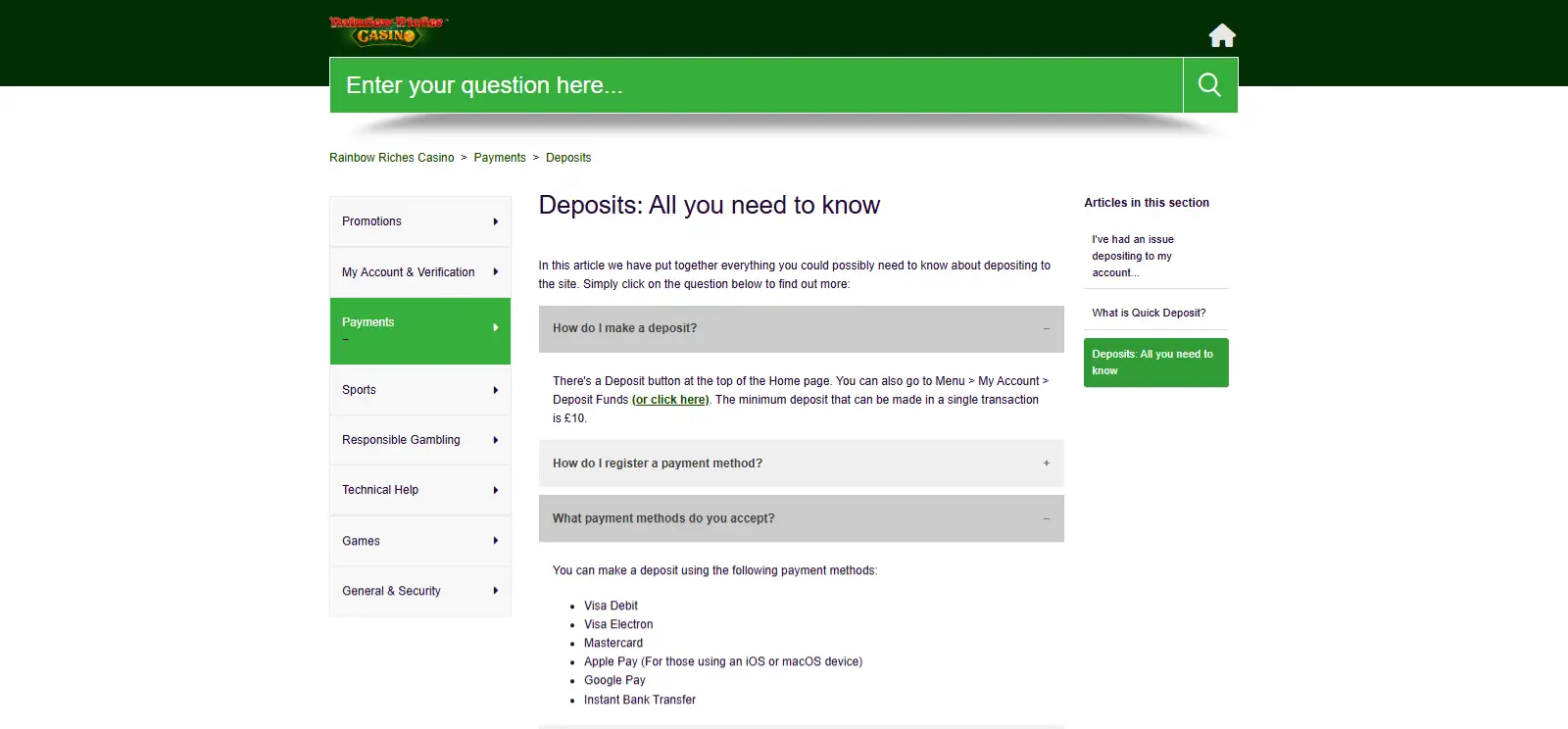
A £10 deposit can clear a bonus threshold without making the offer worthwhile. Treat eligibility and value as separate checks: first confirm that your deposit qualifies, then read what the bonus requires before you can withdraw winnings.
A specialist review describes promotions where the cashier accepts £5, but the bonus only starts with a £10 qualifying deposit. That is an offer-specific condition, not a rule you can infer from the site’s general cashier minimum. If you plan to deposit £10, check the promotion’s wording for the qualifying amount, whether you must opt in, and whether the offer is available to you. A qualifying deposit is not itself a bonus.
The important rule for current offers is the wagering cap. Since 19 January 2026, the UK Gambling Commission has limited bonus wagering requirements to 10x the bonus funds. In practical terms, an operator cannot set a requirement above that cap for a bonus. Do not rely on old promotional wording that gives a higher multiple; the current limit applies to UK-licensed gambling incentives.
That cap does not tell you how attractive an offer is. The bonus amount, eligible games, time allowed to use the funds and any withdrawal restrictions can all affect its value. Bonus funds must expire within the permitted period of 7 to 30 days, and while wagering them, you cannot place a slot bet above £5 per spin. Read those conditions alongside the wagering requirement rather than focusing on the headline amount.
A no-deposit bonus is different: the phrase means the promotion does not require a deposit to claim it. A £10 deposit may therefore be irrelevant to eligibility unless the terms describe a separate deposit-based offer. Check what action activates the promotion and what conditions apply to winnings before deciding to fund an account.


Before depositing, set a financial limit you can afford to lose. UK-licensed operators must prompt new customers to set a limit before their first deposit, and you must be at least 18 and have your age verified before depositing. If the offer’s rules are unclear, pause rather than treating the cashier minimum as proof that the bonus will apply. A small deposit can unlock access, not value.
When a £10 Minimum Applies Across Payment Methods
A £10 cashier minimum does not automatically mean that every payment option has its own £10 threshold. At a given UK operator, the stated minimum generally applies across the available methods. There can be exceptions: a casino may require a higher amount for direct banking than for a debit card or e-wallet. The cashier’s terms, rather than the payment label alone, determine what you can deposit.
That distinction matters when comparing a casino with a £10 minimum deposit in the UK against one that advertises a lower figure. If the lower threshold applies only to a particular method, it may not be the amount you can use with your preferred option. Look at the minimum beside each method in the cashier, and check whether the figure refers to the account overall or to that specific transaction route.
- Check the minimum beside each method in the cashier
- Verify if the threshold refers to the account or a specific route
- Compare offer rules rather than payment buttons
- Assume every payment option has the same £10 threshold
- Assume a lower threshold applies to your preferred option
- Assume switching payment methods changes bonus terms
Payment method and welcome-bonus eligibility are separate questions. At UK-licensed casinos, a deposit made through direct banking can qualify for a welcome offer on the same basis as a debit-card or e-wallet deposit. The promotional terms do not change simply because you chose one of those methods over another.
The same separation applies to restrictions attached to an offer. Wagering requirements, eligible games and any maximum withdrawal cap are linked to the bonus amount, not to the method used to fund the account. If an offer is unsuitable, switching from direct banking to a card will not make its terms more favourable. The useful comparison is between the offer rules, not between payment buttons.
A simple comparison table keeps the decision clear:
| Check | What it tells you |
|---|---|
| Cashier minimum by method | Whether £10 is accepted through your chosen route |
| Bonus qualification | Whether that deposit meets the offer’s stated entry conditions |
| Bonus terms | Which wagering, game and withdrawal rules apply |
This avoids treating “£10 minimum” as a promise that every feature works identically. The operator may set one common cashier threshold, or a higher one for a particular method; meanwhile, bonus rules remain attached to the offer rather than the payment route. Separate columns. Better judgement.
Use a debit card, an e-wallet funded by debit, or direct banking for gambling deposits; UK-licensed casinos cannot accept credit-card gambling payments. Before your first deposit, set a financial limit you can afford to stick to. Then compare the cashier minimum with the promotion’s qualifying deposit, if you intend to claim one. A casino with a £10 minimum deposit is only a match when both the payment threshold and the offer conditions fit your plan.
Check the Cashier Rules Before You Deposit
A £10 minimum is useful only if the cashier accepts that amount through the payment option you intend to use. Before you fund an account, check the operator’s own cashier and terms rather than relying on a summary elsewhere. The key is whether the stated figure applies to your transaction, not simply whether it appears on a general information page.


Use this checklist:
- Confirm the minimum at the point of payment. Check the amount shown after selecting your payment method. A site may state a general minimum while applying restrictions to particular options.
- Check low-deposit limits specifically. A specialist review has reported that some casinos restrict certain payment methods for very small deposits, including at the £1 level. Treat that as a prompt to verify the cashier, not as a rule that applies everywhere.
- Use a permitted funding source. The UK credit-card gambling ban took effect in 2020. Deposits must be made using a debit card, an e-wallet funded by debit, or a bank account; credit cards are not an acceptable gambling deposit method.
- Check account requirements before trying to pay. UK-licensed operators must verify your age before allowing a deposit. You must be at least 18 to gamble legally, so make sure you can complete the required checks rather than assuming the payment screen is the only step.
- Set your financial limit first. New customers must be prompted to set a limit before their first deposit, and account-level controls must be accessible. Decide what you can afford before choosing the amount; a cashier minimum is not a suggested spend.
- Check the operator’s UK status. A casino serving British customers for real-money play must hold the relevant UK Gambling Commission licence. A polished cashier or familiar payment logo is not proof of that licence.
These checks help distinguish a usable £10 option from a figure that is merely advertised. If the cashier rejects the amount, changes the permitted method, or leaves the terms unclear, pause and confirm the rule with the operator before proceeding. A low threshold is no shortcut around the rules.
Depositing £10 for Real-Money Play
A £10 deposit gives you a balance to use for real-money play, but it does not tell you how much you must have before the casino will let you withdraw. The cashier sets those rules separately. Check the withdrawal minimum before paying in, especially if you want to keep your starting balance small.
A specialist review reported minimum withdrawal figures ranging from £1 to £5 at some casinos. Treat that as a reported range, not a promise that every operator offers those terms. The amount can depend on the casino’s own rules, and a withdrawal request below its stated threshold may not be available. Read the cashier’s withdrawal conditions rather than assuming that a small deposit can be cashed out on the same basis.
Attention: A payment method’s ability to support a small transaction does not mean the casino’s own withdrawal threshold is equally low.
There is a practical difference between a payment method supporting a small transaction and a casino allowing a withdrawal of that size. Debit cards and some e-wallets can support £1 transactions, but that does not establish the casino’s cash-out threshold. Your account balance must meet the operator’s withdrawal rule before you can request a payout.
For real-money play in the UK, use a casino licensed by the UK Gambling Commission. Licensed operators must verify your age before allowing a deposit; online gambling is for people aged 18 and over. They must also prompt new customers to set a financial limit before the first deposit, with account-level controls available. Set a limit you can afford before funding the account.
Keep the decision simple: check the cashier minimum for depositing, then check the separate minimum for withdrawing. If either condition makes a £10 balance impractical for your plans, choose another licensed option rather than relying on an assumption. The two thresholds serve different purposes.
PayPal and Other Payment Fees at the £10 Level
A cashier minimum and a payment fee are separate costs. The casino sets the minimum it will accept; a payment provider may charge for processing a transaction. If a fee is taken from the amount you send, a £10 payment would leave less than £10 to reach your casino balance. Whether that affects your deposit depends on how the provider applies its fee and how the casino records the transaction.

A specialist review reported flat transaction fees of £1 to £3 for some payment providers. Treat that as a reported example, not a standard charge across payment services. It does not establish that PayPal charges a fee for casino deposits, or that every casino accepts PayPal. Check the provider’s fee information and the casino cashier before confirming a payment.
The key comparison is the total cost of getting funds into your account, not simply the amount displayed beside the deposit option. If a fee is deducted from a £10 transfer, the balance reaching the casino could be £7 to £9. If the fee is charged separately, the full deposit may arrive while the total cost to you is higher. The payment screen should make clear which arrangement applies; do not assume that the cashier minimum guarantees the same amount will be credited.
PayPal and other e-wallets also depend on how they are funded. UK gambling deposits must not be made with credit cards, including through a wallet used to route credit-card funds. Use an eligible debit-funded wallet or another permitted method, and confirm that the casino accepts it before proceeding.
For a fair comparison, note the deposit amount, any provider charge, and the amount credited. A payment method with no stated fee may be cheaper for this transaction, but availability and terms still matter. Set a financial limit before your first deposit, then make sure the payment cost fits within it. A small charge can matter more when the deposit itself is modest.
What is the best £1 minimum deposit casino in the UK?
NetBet is the only UKGC-listed casino in the verified list with a £1 cashier minimum. Check its current cashier and withdrawal terms before depositing.
Can I take out winnings from a £1 deposit?
Yes, but a £1 deposit does not guarantee that you can withdraw a £1 balance: many UK casinos set minimum withdrawals between £1 and £5, and some set them higher. Check the casino’s withdrawal threshold and any applicable terms before depositing.
What is the maximum wagering requirement in Great Britain?
Since 19 January 2026, gambling incentives in Great Britain cannot require more than 10x wagering of bonus funds.
How should players choose a low-deposit casino in the UK?
Choose a UKGC-licensed casino that accepts a deposit within your budget, then check its withdrawal minimum and whether that deposit qualifies for any promotion. Some casinos exclude the lowest deposit amounts from welcome offers.
Are low-deposit casinos safe to use in the UK?
Use a casino that holds a UK Gambling Commission licence, and make sure you are at least 18. A low deposit minimum does not remove the need to check the casino’s terms or set a limit you can afford to lose.
Which payment method is best for low-deposit casino players?
Debit cards and some e-wallets support £1 transactions, making them options for low deposits. Check the cashier’s minimum for your chosen method, as some payment providers charge transaction fees.
What is the minimum deposit at UK casinos accepting direct banking?
The typical minimum is £10, although some operators set it at £5 or £20. Check the cashier’s direct banking option, since its minimum can be higher than the one for cards or e-wallets.
Created by the ”Rainbow Riches Casino 2” editorial team.